Stories
34,35
0
150
30
Articles: Physical Sciences
The Department of Energy has given the green light for construction to begin on a high-energy upgrade that will further boost the performance of the Linac Coherent Light Source (LCLS), the world’s most powerful X-ray free-electron laser (XFEL) at the DOE’s SLAC National Accelerator Laboratory. Read on to learn more about it.

Articles: AR/AI
Opto Generative Pretrained Transformer (OptoGPT), a decoder-only transformer, developed by University of Michigan engineers, harnesses the computer architecture underpinning ChatGPT to work backward from desired optical properties to the material structure that can provide them. Read on to learn more.
Products: Imaging
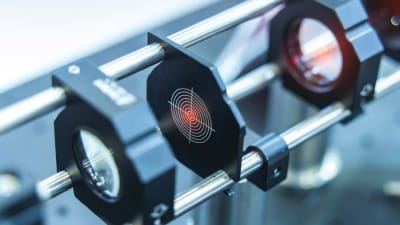
See what's in the product showcase, including VSD’s innovative SV-2000 Flex; Keysight Technologies' N7718C Optical Reference Transmitter; MKS Instruments' Newport™ TLS260B Tunable Light Sources; Analog Modules' Picosecond Pulsed Seed Laser Diode Driver, Model 766A; and more.
Application Briefs: Photonics/Optics
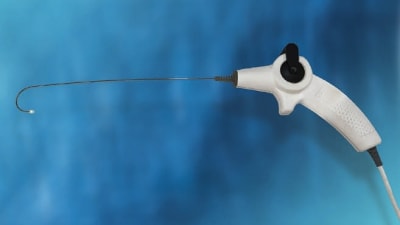
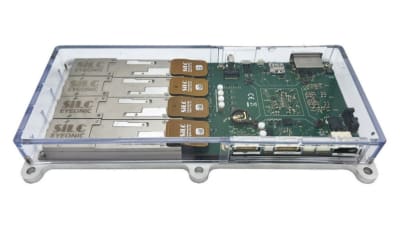
Photonics & Imaging Technology caught up with Dr. Mehdi Asghari, SiLC Technologies CEO, to discuss their approach to designing and manufacturing FMCW LiDAR technology. Read on for the entire interview.
Briefs: Green Design & Manufacturing
Researchers have developed a new way to map water on land in the tropics. Called the UC Berkeley Random Walk Algorithm WaterMask, this advanced monitoring technology uses L-band microwaves from the Cyclone Global Navigation Satellite System to “see” water hidden beneath visual barriers, like tree canopies and clouds. Read on to learn more.

Briefs: Photonics/Optics
Imagine if physicians could capture 3D projections of medical scans, suspending them inside an acrylic cube to create a hand-held reproduction of a patient’s heart, brain, kidneys, or other organs. Then, when the visit is done, a quick blast of heat erases the projection, and the cube is ready for the next scan. A new report by researchers at Dartmouth and Southern Methodist University outlines a technical breakthrough that could enable such scenarios, and others, with widespread utility. Read on to learn more.
Briefs: Lighting
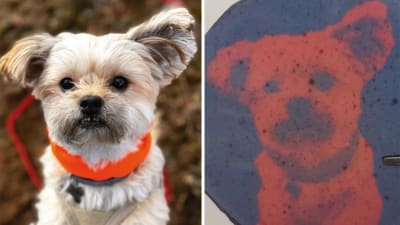
A new type of organic light emitting diode (OLED) could replace bulky night vision goggles with lightweight glasses, making them cheaper and more practical for prolonged use, according to University of Michigan researchers. Read on to learn more.
Briefs: Imaging
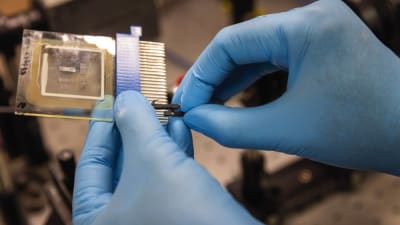
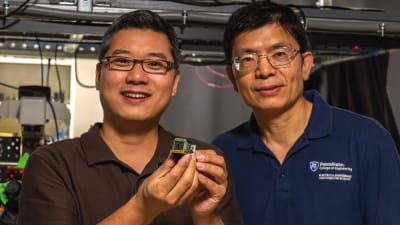
Butterflies can see more of the world than humans, including more colors and the field oscillation direction, or polarization, of light. Other species, like the mantis shrimp, can sense an even wider spectrum of light, as well as the circular polarization, or spinning states, of light waves. Inspired by these abilities in the animal kingdom, researchers have developed an ultrathin optical element known as a metasurface, which can attach to a conventional camera and encode the spectral and polarization data of images captured in a snapshot or video through tiny, antenna-like nano-structures that tailor light properties.
Briefs: Photonics/Optics
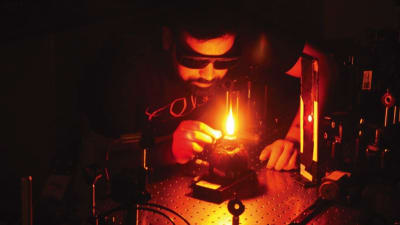
A team of scientists has developed an ultrafast imaging technique, called femtosecond laser sheet-compressed ultrafast photography, that can compile videos of incredibly transient details. Read on to learn more about it.
Articles: AR/AI
Event-based sensing enables new approaches to machine learning. An object recognition or detection algorithm that, until now, could only use the spatial information from a frame can now access another dimension: time. Read on to learn more.

Quiz: Robotics, Automation & Control
Machine vision is the technology, software, hardware, integrated systems, actions, methods, and expertise used to provide imaging-based automatic inspection and analysis. How much do you know about machine vision? Find out with this quiz.

Special Reports: Test & Measurement

RF & Microwave Electronics - October 2024
How a tiny filter could have an enormous impact on wireless communications…RF interconnects play key role in hypersonic missile development…a laser clock could transform satellite navigation...Special Reports: Sensors/Data Acquisition

Special Report: Smart Factory/IIOT - October 2024
Factories are getting "smarter" and more automated by the day, thanks to advances in AI, robotics, microelectronics and sensors. In this compendium of recent articles from the editors of Tech...Videos: Photonics/Optics
Watch this video to learn more about three new imaging technologies, including one on a new scientific technique that could significantly improve the reference frames for GPS navigation services. One on off-road autonomous driving tools with a focus on stealth for the military and agility for space and agriculture clients, and one on a novel approach for creating high-performance, ultrafast lasers on nanophotonic chips.
INSIDER: Photonics/Optics
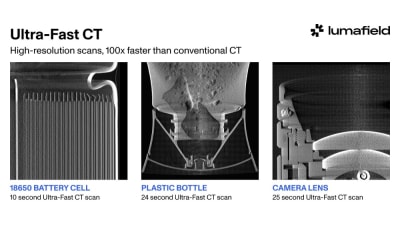
At the Battery Show this week, Lumafield announced the launch of its Ultra-Fast Computed Tomography (CT) technology, a groundbreaking advancement in manufacturing...
Blog: Electronics & Computers
Researchers have demonstrated that their smartphone-based digital holographic microscope can capture, reconstruct, and display holograms in almost real time.

Briefs: Imaging
In a newly published paper in the journal Science, researcher Qiushi Guo demonstrated a novel approach for creating high-performance, ultrafast lasers on nanophotonic chips. His work centers on miniaturizing mode-lock lasers. Read on to learn more.

Briefs: RF & Microwave Electronics
Southwest Research Institute has developed off-road autonomous driving tools with a focus on stealth for the military and agility for space and agriculture clients. The vision-based system pairs stereo cameras with novel algorithms, eliminating the need for LiDAR and active sensors. Read on to learn more.

Briefs: Physical Sciences
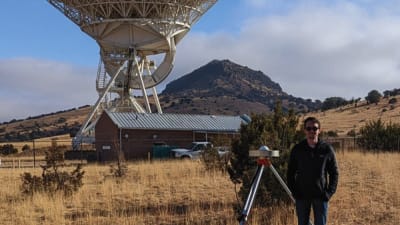
For the first time, researchers at The University of Texas at Austin’s Applied Research Laboratories and NASA’s Goddard Space Flight Center have formed a radio interferometer between a GPS antenna and receiver and a large radio telescope. Read on to learn more about the new technique.
Special Reports: Manufacturing & Prototyping

Space Technology - September 2024
Next‐gen spacecraft electronics…engineering future space habitats…manufacturing in orbit…how to launch it before you build it. Read about these and other exciting advances in this compendium of articles...INSIDER: Manufacturing & Prototyping
Researchers at Chalmers University of Technology have for the first time succeeded in combining two major research fields in photonics by creating a nanoobject with...

INSIDER: Electronics & Computers
A new type of OLED (organic light emitting diode) could replace bulky night vision goggles with lightweight glasses, making them cheaper and more practical for prolonged use, according to...
INSIDER: Photonics/Optics
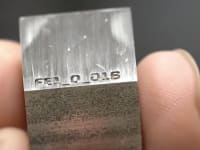
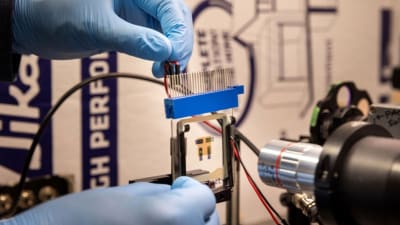
Researchers in Purdue University’s College of Engineering have developed a patent-pending optical counterfeit detection method for chips used in semiconductor devices.

INSIDER: Sensors/Data Acquisition
An estimated 100 earthquakes worldwide cause damage each year. This damage includes collapsed buildings, downed electrical lines and more. For first responders, assessing...

Blog: Imaging
URDFormer takes images of real environments from the internet and quickly creates physically realistic simulation environments where robots can train.

Blog: Robotics, Automation & Control
A team developed a pinhole compound vision system by adopting new materials and structures. This system features several key characteristics, including an inherent hemispherical perovskite nanowire array imager with high pixel density to enlarge the imaging field and a 3D-printed lens-free pinhole array.
Articles: Photonics/Optics
See the products of tomorrow, including a new type of glass with unique and even contradictory properties, a novel approach for actively controlling Dutch-roll oscillations of an eVTOL aircraft by using existing outboard propellers to dampen oscillations, and the world’s first practical titanium-sapphire laser on a chip.
Briefs: Materials
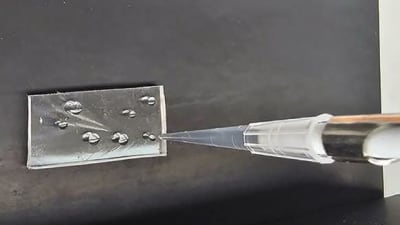
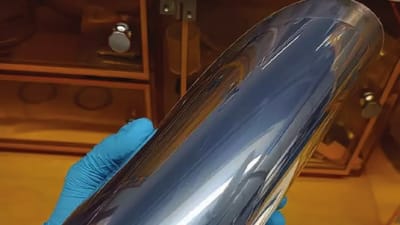
Researchers have developed a new way to produce and shape large, high-quality mirrors that are much thinner than conventional space-telescope mirrors. The final product is even flexible enough to be rolled up and stored compactly inside a launch vehicle. Read on to learn more.
Briefs: Materials
Researchers have developed standards and calibrations for optical microscopes that allow quantum dots to be aligned with the center of a photonic component to within an error of 10 to 20 nanometers (about one-thousandth the thickness of a sheet of paper). Such alignment is critical for chip-scale devices that employ the radiation emitted by quantum dots to store and transmit quantum information. Read on to learn more.

Top Stories
 Blog: Lighting

A Stretchable OLED that Can Maintain Most of Its Luminescence
 INSIDER: Energy

Advancing All-Solid-State Batteries
 Blog: Power

My Opinion: We Need More Power Soon — Is Nuclear the Answer?
 Quiz: Energy

 Blog: Lighting Technology

Microscopic Swimming Machines that Can Sense, Respond to Surroundings
 Blog: Data Acquisition

Webcasts
 On-Demand Webinars: Electronics & Computers

Advantages of Smart Power Distribution Unit Design for Automotive &...
 Upcoming Webinars: Automotive

Quiet, Please: NVH Improvement Opportunities in the Early Design...
 Upcoming Webinars: Test & Measurement

From Spreadsheets to Insights: Fast Data Analysis Without Complex...
 Upcoming Webinars: Defense

Cooling a New Generation of Aerospace and Defense Embedded...
 Upcoming Webinars: Sensors/Data Acquisition

Beyond AI-Copy-Paste Engineering: Advanced AI-Integration Success...
 Upcoming Webinars: Power