8,33,42,44,45,47,52,54,68
-1
180
30
Briefs: Energy
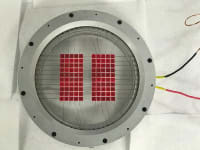
The Korea Research Institute of Standards and Science has developed a metamaterial that traps and amplifies micro-vibrations in small areas. This innovation is expected to increase the power output of energy harvesting, which converts wasted vibration energy into electricity, and accelerate its commercialization. Read on to learn more.
Briefs: Motion Control
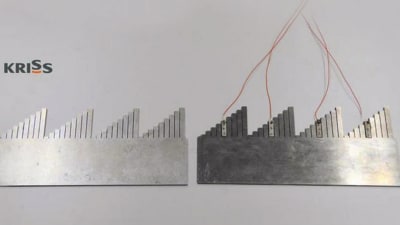
The “nanoswimmers” could be used to remediate contaminated soil, improve water filtration, or even deliver drugs to targeted areas of the body.
Briefs: Software
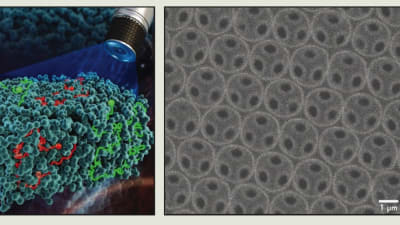
A new paper explores pick-and-place solutions with more precision. In precise pick-and-place, also known as kitting, the robot transforms an unstructured arrangement of objects into an organized arrangement. The approach, dubbed SimPLE (Simulation to Pick Localize and placE), learns to pick, regrasp and place objects using the object’s computer-aided design model. Read on to learn more.

Briefs: Test & Measurement
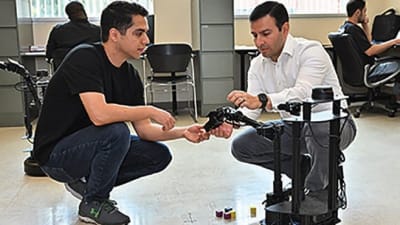
A new algorithm may make robots safer by making them more aware of human inattentiveness. In simulations, it improved safety by about a maximum of 80 percent and efficiency by about a maximum of 38 percent compared to existing methods. Read on to learn more about it.
Briefs: Energy
Researchers at the University of California, Davis, have developed a proof-of-concept sensor that may usher in a new era for millimeter wave radars. They call its design a “mission impossible” made possible. Read on to learn more.
Briefs: Sensors/Data Acquisition
The data collected from cameras and vibration sensors continue to inform next steps in research. The goal is to make this technology commercially available for land-based and offshore wind turbines to ensure a harmonic relationship between wind energy and surrounding wildlife. Read on to learn more.

Briefs: RF & Microwave Electronics
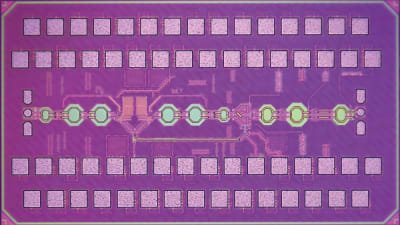
The researchers are currently refining their approach with an eye toward applications where data is limited but high fidelity is required, such as target detection. Read on to learn more.

Briefs: Software
High-performance servo motion is now more affordable and accessible than ever due to integrated controllers, making the technology viable even for applications, which could not formerly support the cost or complexity of traditional implementations. Read on to learn more.

Briefs: Wearables
Researchers at Stanford have been working on skin-like, stretchable electronic devices for over a decade. Recently, they presented a new design and fabrication process for skin-like integrated circuits that are five times smaller and operate at one thousand times higher speeds than earlier versions. Read on to learn more about it.

Briefs: Electronics & Computers
A research team has created an innovative microelectronic device that can potentially function as a sustainable, high-performance “bit-switch.” This paves the way for future computing technologies to process data much faster while using significantly less energy. Read on to learn more.
Briefs: Electronics & Computers
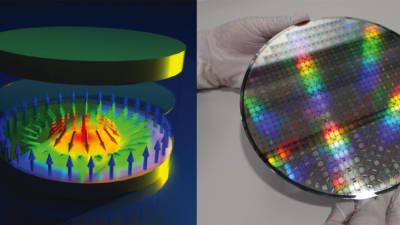
Now, a team from the Max Planck Institute for Polymer Research has developed a new material concept that could allow efficient blue OLEDs with a strongly simplified structure. Read on to learn more.

Briefs: RF & Microwave Electronics
For the first time, researchers at The University of Texas at Austin’s Applied Research Laboratories and NASA’s Goddard Space Flight Center have formed a radio interferometer between a GPS antenna and receiver and a large radio telescope. Read on to learn more about the new technique.

Briefs: Robotics, Automation & Control
Southwest Research Institute has developed off-road autonomous driving tools with a focus on stealth for the military and agility for space and agriculture clients. The vision-based system pairs stereo cameras with novel algorithms, eliminating the need for LiDAR and active sensors. Read on to learn more.

Briefs: Materials
Engineers at NASAs Stennis Space Center have developed the HYdrocarbon Propellants Enabling Reproduction of Flows in Rocket Engines (HYPERFIRE), a sub-scale, non-reacting flow test system. HYPERFIRE uses heated ethane to enable physical simulation of rocket engines powered by a broad range of propellants in an inexpensive, accurate, and simple fashion. Read on to learn more.
Briefs: Energy
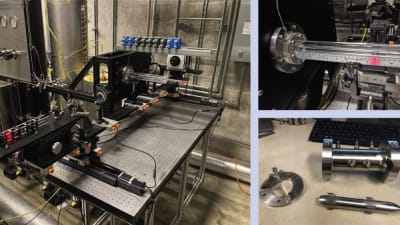
American drivers have long been accustomed to quickly filling up at a gas station with plenty of fuel available, and electric vehicle drivers want their pit stops to mimic this experience. Researchers are working to make EV charging more resilient. Read on to learn more about it.

Briefs: Energy
Researchers have been developing batteries with higher energy storage density, and thus, longer driving range. Other goals include shorter charging times, greater tolerance to low temperatures, and safer operation. One of the more promising such batteries has a lithium-containing cathode supplemented with nickel, manganese, and cobalt (NMC). Read on to learn more.

Briefs: Materials
Researchers are hoping to spark a green battery revolution by showing that iron instead of cobalt and nickel can be used as a cathode material in lithium-ion batteries. Read on to learn more.

Briefs: Energy
A team has created the world’s first anode-free sodium solid-state battery. This research has brought the reality of inexpensive, fast-charging, high-capacity batteries for electric vehicles and grid storage closer than ever. Read on to learn more.

Briefs: Energy
Researchers have developed a new technique to solve the problem of how to increase the capacity of sodium-ion batteries. Read on to learn more about it.

Briefs: Software
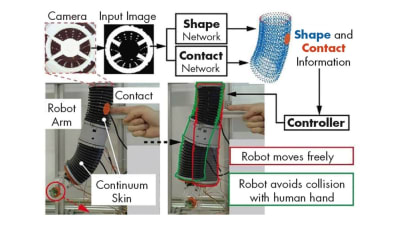
The sensing and control principles used in this framework could lead to new tactile sensors that can be attached to any existing robotics system, offering new sensing and control paradigms for safe human-robot interaction without altering the robot’s original design. Read on to learn more.
Briefs: Photonics/Optics
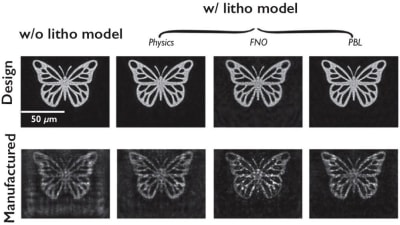
A new method enables optical devices that more closely match their design specifications, boosting accuracy and efficiency. Read on to learn more.
Briefs: RF & Microwave Electronics
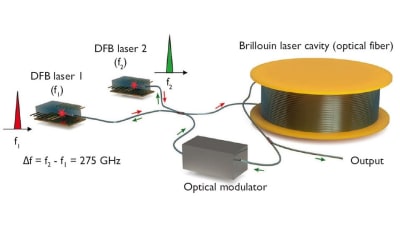
The researchers anticipate that with multiplexing techniques (where more than one channel can be used) and more sensitive receivers, the data rate can be increased to 1 terabit per second, ushering in a new era of near-instantaneous global communication. Read on to learn more.
Briefs: Lighting
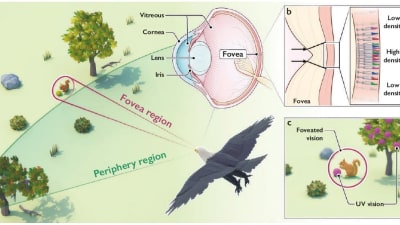
This innovative camera technology represents a significant advance in object detection, offering numerous potential applications across various industries. Read on to learn more.
Briefs: Materials
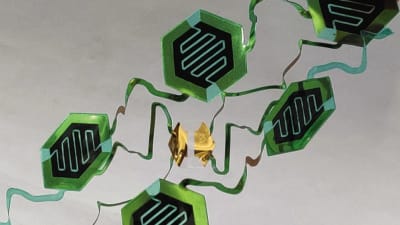
Engineers have developed a new technique for making wearable sensors that enables medical researchers to prototype and test new designs much faster and at a far lower cost than existing methods. Read on to learn more.
Briefs: Sensors/Data Acquisition
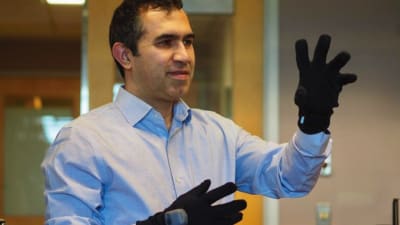
A new groundbreaking “smart glove” is capable of tracking the hand and finger movements of stroke victims during rehabilitation exercises. The glove incorporates a sophisticated network of highly sensitive sensor yarns and pressure sensors that are woven into a comfortable stretchy fabric. Read on to learn more about the smart glove.
Briefs: RF & Microwave Electronics
With a goal to revolutionize cellular communications, Penn engineers have developed an adjustable filter that can successfully prevent interference, even in higher-frequency bands of the electromagnetic spectrum. Read on to learn more about the matter.

Briefs: Software
Scientists have pioneered a method for using semiconductor technology to manufacture processors that significantly enhance the efficiency of transmitting vast amounts of data across the globe. The innovation is poised to transform the landscape of wireless communication. Read on to learn more.

Briefs: Electronics & Computers
After announcing a ferroelectric semiconductor at the nanoscale thinness required for modern computing components, a University of Michigan team has demonstrated a reconfigurable transistor using that material. Read on to learn more.

Briefs: AR/AI
Penn Engineers have developed a new chip that uses light waves, rather than electricity, to perform the complex math essential to training AI. The chip has the potential to radically accelerate the processing speed of computers while also reducing their energy consumption. Read on to learn more.

Top Stories
 Blog: Lighting

A Stretchable OLED that Can Maintain Most of Its Luminescence
 Blog: Energy

Batteries that Can Withstand the Cold
 INSIDER: Energy

Advancing All-Solid-State Batteries
 Blog: Power

My Opinion: We Need More Power Soon — Is Nuclear the Answer?
 Quiz: Power

 Blog: Data Acquisition

Webcasts
 Upcoming Webinars: Test & Measurement

From Spreadsheets to Insights: Fast Data Analysis Without Complex...
 Upcoming Webinars: Defense

Cooling a New Generation of Aerospace and Defense Embedded...
 Upcoming Webinars: AR/AI

Beyond AI-Copy-Paste Engineering: Advanced AI-Integration Success...
 Upcoming Webinars: Automotive

Battery Abuse Testing: Pushing to Failure
 Upcoming Webinars: Connectivity

A FREE Two-Day Event Dedicated to Connected Mobility
 Upcoming Webinars: RF & Microwave Electronics

Choosing the Right N-Port Strategy: Multiport VNAs vs. Switch...