8,33,42,44,45,47,52,54,68
-1
810
30
Briefs: Manufacturing & Prototyping
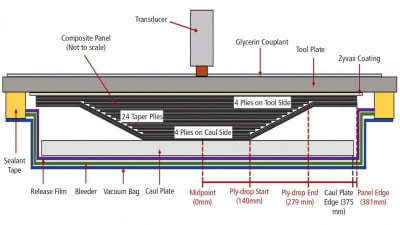
This system enhances processing via real-time, non-destructive defect tracking.
Briefs: Sensors/Data Acquisition
This could lead to the commercial development of smart glass, with applications ranging from imaging to advanced robotics.

Briefs: Transportation
The system could one day replace LiDAR and cameras in automated manufacturing, biomedical imaging, and autonomous driving.

Briefs: Motion Control
The machines fold themselves within 100 milliseconds and can flatten and refold thousands of times.

Briefs: Energy
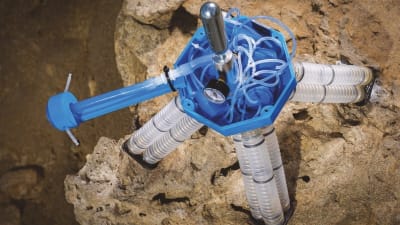
The walking quadruped is controlled and powered by pressurized air.
Briefs: Photonics/Optics
One of the final hurdles to hydrogen power is securing a safe method for detecting hydrogen leaks.

Briefs: Imaging
The LiDAR-based system could “see through” objects to warn of potential hazards without distracting the driver.

Briefs: RF & Microwave Electronics
Applications include remote sensing, laser spectroscopy, and gas analysis.

Briefs: Materials
Complete integrated circuits with more than 1,000 organic electrochemical transistors can be screen-printed.

Briefs: AR/AI
The algorithm identified a new compound potentially useful for photonic devices and biologically inspired computers.

Briefs: Transportation
The transistors enable power converters to perform at substantially improved efficiencies, especially in high-power applications.

Briefs: Software
The software could help reduce cost and waste for companies using additive manufacturing to mass-produce parts in factories.

Briefs: Electronics & Computers
The new material could help put more power in smaller microchips.

Briefs: Manufacturing & Prototyping
Thanks to its flexibility and adhesion, the biodegradable display can be worn directly on the hand.

Briefs: Mechanical & Fluid Systems
The technology could boost quantum computers and other superconducting electronics.

Briefs: Electronics & Computers
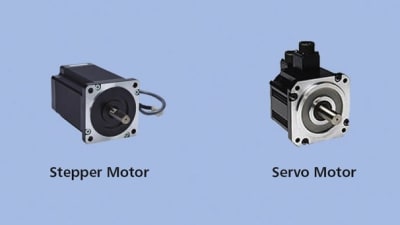
New high bus voltage stepper motor systems avoid the complexity and expense of servo motors.
Briefs: Manufacturing & Prototyping
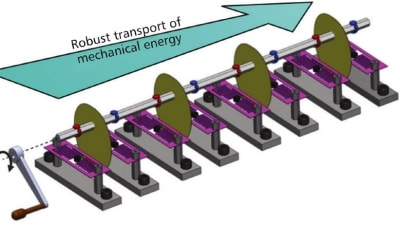
This work could lead to much more robust devices that continue to operate in spite of damage.

Briefs: Electronics & Computers
The technology could help computers process visual information more like the human brain.

Briefs: Electronics & Computers
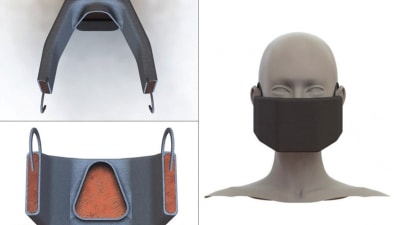
The reusable mask would include a heated copper mesh powered by a battery and surrounded by insulating neoprene.
Briefs: Sensors/Data Acquisition
Mobile radar devices could replace standard stethoscopes.

Briefs: Automotive
The inexpensive cameras are easy to produce.

Briefs: Semiconductors & ICs
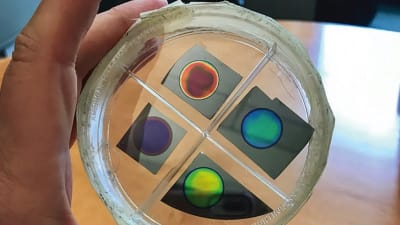
A smartphone, combined with nanoscale porous silicon, enables inexpensive, simple, home diagnostics.
Briefs: Sensors/Data Acquisition
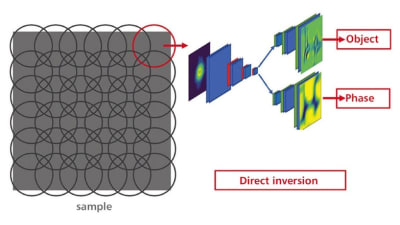
Artificial intelligence is used to decode X-ray images faster, which could aid innovations in medicine, materials, and energy.
Briefs: Energy
Due to the chemical stability and durability of industrial polymers, plastic waste does not easily degrade in landfills and is often burned, which produces carbon dioxide and other hazardous gases. In order...

Briefs: Sensors/Data Acquisition
The promise of personalized medicine involves a simple device that keeps each person apprised of their level of health, identifies even trace amounts of undesirable biomarkers in...

Briefs: Wearables
Nearly 100% of all-carbon-based transistors are reclaimed while retaining future functionality of the materials.

Briefs: Communications
The device, powered by ultrasound waves, could help doctors monitor the health of transplanted organs and provide early warning of potential transplant failure.
Briefs: Robotics, Automation & Control
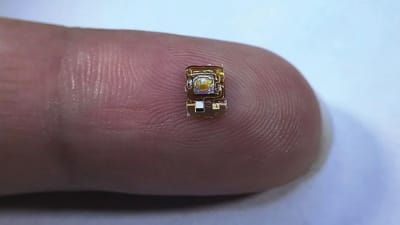
This software could also be used for indoor navigation assistance for the visually impaired.

Top Stories
 Blog: Lighting

A Stretchable OLED that Can Maintain Most of Its Luminescence
 Blog: Energy

Batteries that Can Withstand the Cold
 INSIDER: Energy

Advancing All-Solid-State Batteries
 Blog: Power

My Opinion: We Need More Power Soon — Is Nuclear the Answer?
 Quiz: Power

 Blog: Data Acquisition

Webcasts
 Upcoming Webinars: Test & Measurement

From Spreadsheets to Insights: Fast Data Analysis Without Complex...
 Upcoming Webinars: Defense

Cooling a New Generation of Aerospace and Defense Embedded...
 Upcoming Webinars: AR/AI

Beyond AI-Copy-Paste Engineering: Advanced AI-Integration Success...
 Upcoming Webinars: Automotive

Battery Abuse Testing: Pushing to Failure
 Upcoming Webinars: Connectivity

A FREE Two-Day Event Dedicated to Connected Mobility
 Upcoming Webinars: RF & Microwave Electronics

Choosing the Right N-Port Strategy: Multiport VNAs vs. Switch...