36,38
-1
90
30
Briefs: Power
A PNNL research team used a simple mixed-salt water-based solution and their knowledge of metal properties to separate valuable minerals in continuously flowing reaction chambers. Read on to learn more.

Briefs: Energy
Researchers have developed a pioneering technique for producing large-scale graphene current collectors. This breakthrough promises to significantly enhance the safety and performance of lithium-ion batteries (LIBs), addressing a critical challenge in energy storage technology. Read on to learn more.

Briefs: Energy
Using transmission electron microscopes, Researchers at Graz University of Technology were able to systematically track lithium ions as they traveled through battery material, map their arrangement in the crystal lattice of an iron phosphate cathode with unprecedented resolution, and precisely quantify their distribution in the crystal. Read on to learn more.

Briefs: Materials
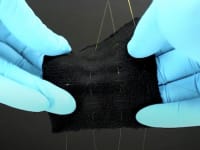
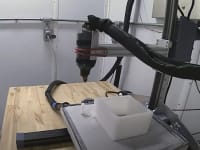
Biomedical engineers have developed a “bio-ink” for 3D-printed materials that could serve as scaffolds for growing human tissues to repair or replace damaged ones in the body. Read on to learn more.

Briefs: Design
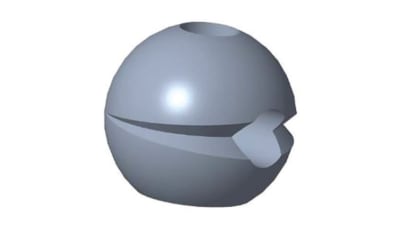
Innovators at NASA Johnson Space Center have developed an adjustable thermal control ball valve assembly which utilizes a unique geometric ball valve design to facilitate precise thermal control within a spacesuit. The technology meters the coolant flow going to the cooling and ventilation garment, worn by an astronaut in the next generation space suit. Read on to learn more.
Briefs: Materials
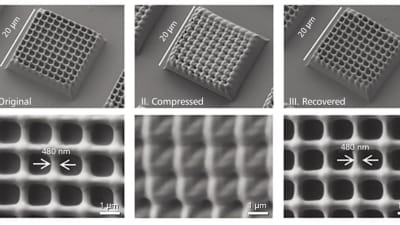
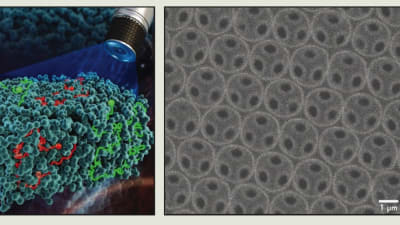
Researchers have successfully demonstrated the 4D printing of shape memory polymers in submicron dimensions that are comparable to the wavelength of visible light. Read on to learn more.
Briefs: Software
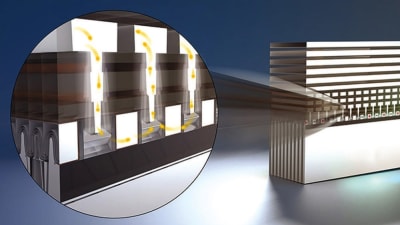
A new approach uses commercial chip fab materials and techniques to fabricate specialized transistors to serve as the building block of the timing device. Read on to learn more.
Briefs: Manufacturing & Prototyping
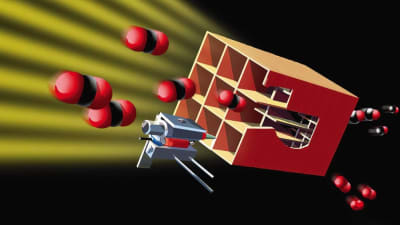
In recent years, engineers at ETH Zurich have developed the technology to produce liquid fuels from sunlight and air. In 2019, they demonstrated the entire thermochemical process chain under real conditions for the first time, in the middle of Zurich, on the roof of ETH Machine Laboratory. Two ETH spin-offs, Climeworks and Synhelion, are further developing and commercializing the technologies. Read on to learn more.
Briefs: Energy
A silicone membrane for wearable devices is more comfortable and breathable thanks to better-sized pores made with the help of citric acid crystals. The new preparation technique fabricates thin, silicone-based patches that rapidly wick water away from the skin. The technique could reduce the redness and itching caused by wearable biosensors that trap sweat beneath them. Read on to learn more.

Briefs: Wearables
Purdue University engineers have developed a method to transform existing cloth items into battery-free wearables resistant to laundering. These smart clothes are powered wirelessly through a flexible, silk-based coil sewn on the textile. Read on to learn more.

Briefs: Physical Sciences
Potential Solvents for Building on Moon and Mars
Researchers have taken the first steps toward finding liquid solvents that may someday help extract critical building materials from lunar and Martian rock dust, an important piece in making long-term space travel possible. Read on to learn more.
Briefs: Imaging
Imagine if physicians could capture 3D projections of medical scans, suspending them inside an acrylic cube to create a hand-held reproduction of a patient’s heart, brain, kidneys, or other organs. Then, when the visit is done, a quick blast of heat erases the projection, and the cube is ready for the next scan. A new report by researchers at Dartmouth and Southern Methodist University outlines a technical breakthrough that could enable such scenarios, and others, with widespread utility. Read on to learn more.

Briefs: Materials
Researchers have developed better rechargeable batteries by applying silicon to the batteries’ cathodes. Read on to learn more about it.
Briefs: Wearables
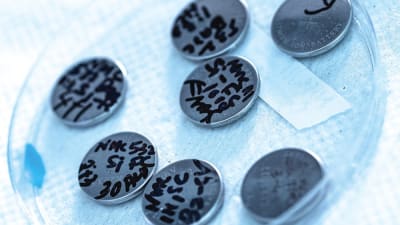
A flexible and stretchable cell has been developed for wearable electronic devices that require a reliable and efficient energy source that can easily be integrated into the human body. Read on to learn more about it.
Briefs: Green Design & Manufacturing
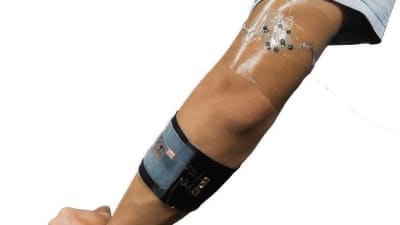
It's time to rethink battery technology. Compared to other existing or developing technologies, a new lithium metal-based solid-state battery brings some significant advantages: It can be charged and discharged within one minute, lasts about 10 times as long as a Li-ion battery, and is insensitive to temperature fluctuations. Read on to learn more about it.
Briefs: Wearables
Leveraging Machine Learning and AI to Automate Wearable Tech Design
Defying engineering challenges in record time, researchers at the University of Maryland developed a machine learning model that eliminates hassles in materials design to yield green technologies used in wearable heaters. Read on to learn more.
Briefs: Materials
The novel solar concentrators can be applied to textile fibers without the textile becoming brittle and susceptible to cracking or accumulating water vapor in the form of sweat. Read on to learn more.
Briefs: Transportation
Applications include vehicle and aircraft tires, sports helmets, military equipment, and seals and couplings. Read on to learn more.
Briefs: Materials
If the outside of clothing or a vehicle were covered with the coating, an infrared camera would have a harder time distinguishing what is underneath. Read on to learn what this means.

Briefs: Internet of Things
The Korea Research Institute of Standards and Science has developed a metamaterial that traps and amplifies micro-vibrations in small areas. This innovation is expected to increase the power output of energy harvesting, which converts wasted vibration energy into electricity, and accelerate its commercialization. Read on to learn more.
Briefs: Manufacturing & Prototyping
Inspired by the paper-folding art of origami, North Carolina State University engineers have discovered a way to make a single plastic cubed structure transform into more than 1,000 configurations using only three active motors. The findings could pave the way for shape-shifting artificial systems that can take on multiple functions and even carry a load. Read on to learn more.

Briefs: Nanotechnology
The “nanoswimmers” could be used to remediate contaminated soil, improve water filtration, or even deliver drugs to targeted areas of the body.
Briefs: Robotics, Automation & Control
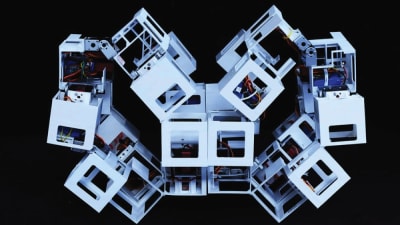
Inspired by the paper-folding art of origami, North Carolina State University engineers have discovered a way to make a single plastic cubed structure transform into more than 1,000 configurations using only three active motors. Read on to learn more.
Briefs: Sensors/Data Acquisition
Engineers have developed an ultra-sensitive sensor made with graphene that can detect extraordinarily low concentrations of lead ions in water. The device achieves a record limit of detection of lead down to the femtomolar range, which is one million times more sensitive than previous sensing technologies. Read on to learn more.

Briefs: Sensors/Data Acquisition
Researchers at Stanford have been working on skin-like, stretchable electronic devices for over a decade. Recently, they presented a new design and fabrication process for skin-like integrated circuits that are five times smaller and operate at one thousand times higher speeds than earlier versions. Read on to learn more about it.

Briefs: Electronics & Computers
A research team has created an innovative microelectronic device that can potentially function as a sustainable, high-performance “bit-switch.” This paves the way for future computing technologies to process data much faster while using significantly less energy. Read on to learn more.
Briefs: Materials
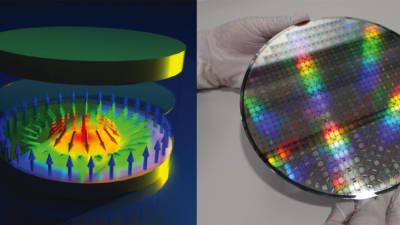
Now, a team from the Max Planck Institute for Polymer Research has developed a new material concept that could allow efficient blue OLEDs with a strongly simplified structure. Read on to learn more.

Briefs: Medical
McGill University researchers have made a breakthrough in diagnostic technology, inventing a ‘lab on a chip’ that can be 3D-printed in just 30 minutes. The chip has the potential to make on-the-spot testing widely accessible. Read on to learn more.

Briefs: Power
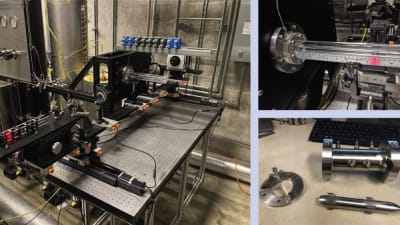
Engineers at NASAs Stennis Space Center have developed the HYdrocarbon Propellants Enabling Reproduction of Flows in Rocket Engines (HYPERFIRE), a sub-scale, non-reacting flow test system. HYPERFIRE uses heated ethane to enable physical simulation of rocket engines powered by a broad range of propellants in an inexpensive, accurate, and simple fashion. Read on to learn more.
Top Stories
 Blog: Lighting

A Stretchable OLED that Can Maintain Most of Its Luminescence
 Blog: Energy

Batteries that Can Withstand the Cold
 INSIDER: Energy

Advancing All-Solid-State Batteries
 Quiz: Energy

 Blog: Physical Sciences

 Blog: Materials

Webcasts
 Upcoming Webinars: Sensors/Data Acquisition

From Spreadsheets to Insights: Fast Data Analysis Without Complex...
 Upcoming Webinars: Electronics & Computers

Cooling a New Generation of Aerospace and Defense Embedded...
 Upcoming Webinars: Sensors/Data Acquisition

Beyond AI-Copy-Paste Engineering: Advanced AI-Integration Success...
 Upcoming Webinars: Power

Battery Abuse Testing: Pushing to Failure
 Upcoming Webinars: Connectivity

A FREE Two-Day Event Dedicated to Connected Mobility
 Upcoming Webinars: Test & Measurement

Choosing the Right N-Port Strategy: Multiport VNAs vs. Switch...