40,51
-1
180
30
Briefs: Motion Control
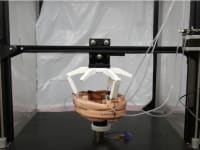
A new robotic system fuses visual information and radio-frequency signals to efficiently find hidden items buried under a pile of objects.

Briefs: Materials
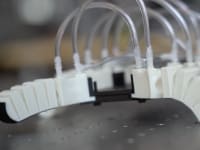
Instead of adding soft materials to a rigid robot body, researchers have taken a soft body and added rigid features to key components.

Briefs: Materials
Researchers have developed a shape-shifting material that can take and hold any possible shape.
Briefs: Materials
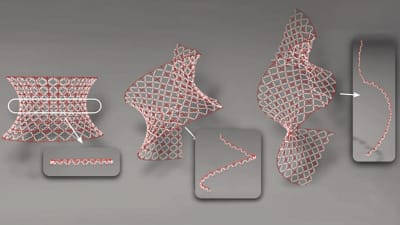
Researchers produced a soft, mechanical metamaterial that can “think” about how forces are applied to it and respond via programmed reactions.

Briefs: Robotics, Automation & Control
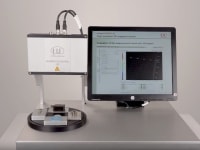
Equipment and test system designers need Ethernet devices that outperform consumer-grade components, while remaining easy to use.

Briefs: Manufacturing & Prototyping
The researchers created these sensing structures using just one material and a single run on a 3D printer.

Briefs: Materials
The soft and stretchable device converts movement into electricity and can work in wet environments.

Briefs: Mechanical & Fluid Systems
This below-the-hook device enables gentle crane placement to decrease the risk of property damage.

Briefs: Motion Control
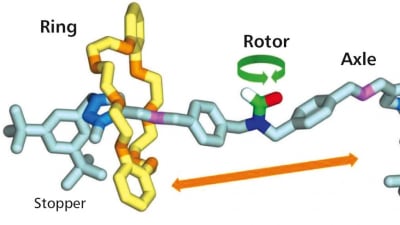
Oscillatory and rotational motions of different parts are combined to pave the way to developing super-miniaturized mechanical devices.
Briefs: Motion Control
The integrated tool eliminates the need for manual operators or additional custom fixtures.

Briefs: Materials
Made from 3D graphene foam, the sensors use a piezoresistive approach, meaning when the material is put under pressure it dynamically changes its electric resistance, easily detecting and adapting to the range of pressure required, from light to heavy.

Briefs: Electronics & Computers
An open-access study in Advanced Science outlines the process by which Preston and lead author Faye Yap harnessed a spider’s physiology in a first step toward a novel area of research they call “necrobotics.”

Briefs: Design
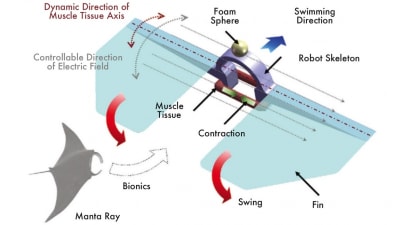
Biomimetics is one of the most important robotic research methods which can improve the kinematic performance of robots by imitating the structure and behavior of natural organisms.
Briefs: Mechanical & Fluid Systems
Researchers have taken inspiration from origami to create inflatable structures that can bend, twist, and move in complex, distinct ways from a single source of pressure.
Briefs: Sensors/Data Acquisition
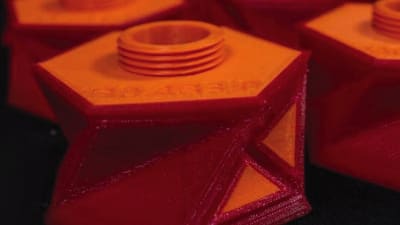
Scientists develop a new approach for miniaturization of soft ultra-compact and highly integrated sensor units for directional tactile sensitivity in e-skin systems.

Briefs: Robotics, Automation & Control
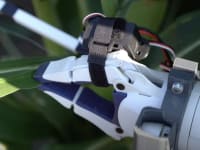
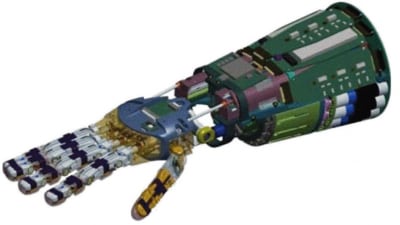
The R2 hand and forearm assembly is designed in a modular fashion, enabling rapid replacement of components and sub-assemblies.
Briefs: Robotics, Automation & Control
For drones to autonomously perform necessary but quotidian tasks, they must be able to adapt to wind conditions in real time.

Briefs: Lighting Technology
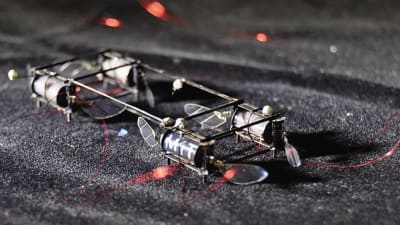
The ability to emit light also brings these microscale robots, which weigh barely more than a paper clip, one step closer to flying on their own outside the lab.
Briefs: Manufacturing & Prototyping
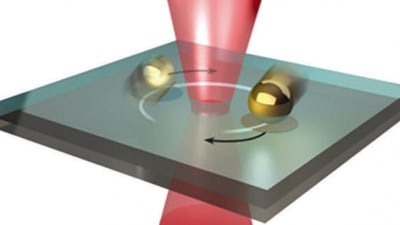
Researchers from the Cockrell School of Engineering at The University of Texas at Austin recently created the first ever solid-state optical nanomotor.
Briefs: Robotics, Automation & Control
The technology could be useful in manufacturing and assembly plants for sorting packages, or in any environment where humans and robots collaborate.

Briefs: Robotics, Automation & Control
Interactive program aids motion planning for environments with obstacles.

Briefs: AR/AI
The piezoelectric “meta-bot” is capable of propulsion, movement, sensing, and decision-making.
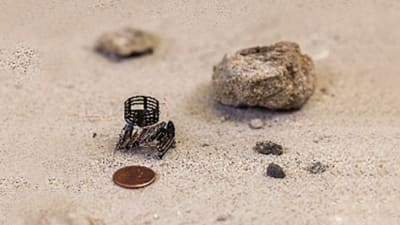
Briefs: Imaging
Researchers built electroluminescent soft artificial muscles for flying, insect-scale robots.
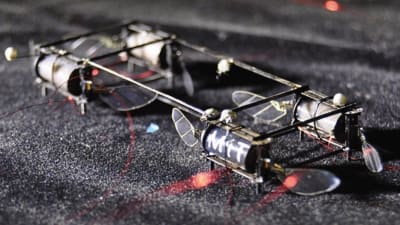
Briefs: Robotics, Automation & Control
A new general-purpose optimizer can speed up the design of walking robots, self-driving vehicles, and other autonomous systems.

Briefs: AR/AI
The robots will be challenged to carry out work too dangerous for humans.
Briefs: Power
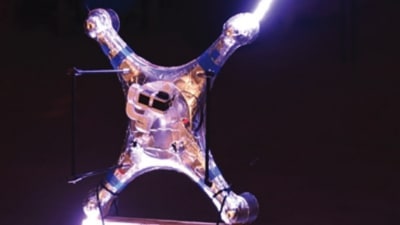
Acoustic optimization for anti-phase asymmetric rotor.
Briefs: Design
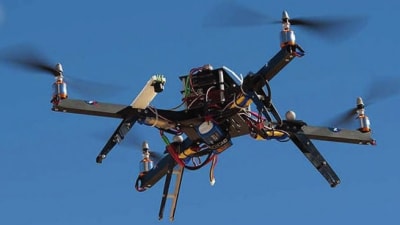
Gust load alleviation is an increasing concern for the design of fixed-wing aircraft with ultra-high aspect wings.

Briefs: Motion Control
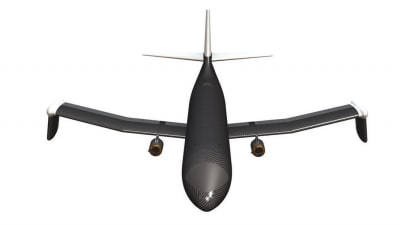
A lightweight alternative to rudders for aircraft with spanwise adaptive wings.
Briefs: Design
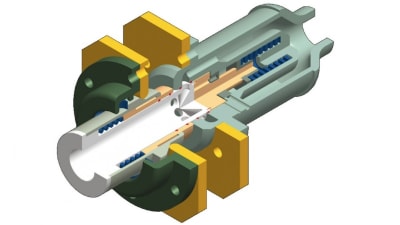
A self-aligning, self-healing system for pneumatics and cryogenics with applications in aerospace.
Top Stories
 Blog: Lighting

A Stretchable OLED that Can Maintain Most of Its Luminescence
 Blog: Energy

Batteries that Can Withstand the Cold
 INSIDER: Energy

Advancing All-Solid-State Batteries
 Quiz: Energy

 Blog: Physical Sciences

 Blog: Materials

Webcasts
 Upcoming Webinars: Test & Measurement

From Spreadsheets to Insights: Fast Data Analysis Without Complex...
 Upcoming Webinars: Electronics & Computers

Cooling a New Generation of Aerospace and Defense Embedded...
 Upcoming Webinars: Test & Measurement

Beyond AI-Copy-Paste Engineering: Advanced AI-Integration Success...
 Upcoming Webinars: Automotive

Battery Abuse Testing: Pushing to Failure
 Upcoming Webinars: Internet of Things

A FREE Two-Day Event Dedicated to Connected Mobility
 Upcoming Webinars: Test & Measurement

Choosing the Right N-Port Strategy: Multiport VNAs vs. Switch...