40,51
-1
210
30
Briefs: AR/AI
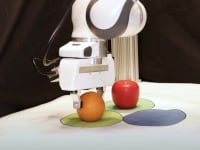
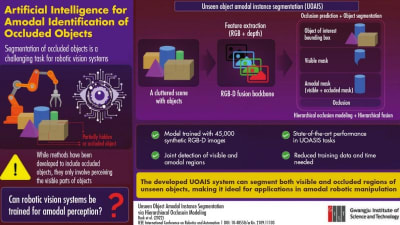
Robotic vision has come a long way, reaching a level of sophistication with applications in complex and demanding tasks, such as autonomous driving and object...
Briefs: Robotics, Automation & Control
MIT engineers have developed a telerobotic system to help surgeons quickly and remotely treat patients experiencing a stroke or aneurysm. With a modified joystick, surgeons in...

Briefs: Robotics, Automation & Control
Legged robots are very promising for use in real-world applications, but their operation in narrow spaces is still challenging. One solution for enhancing their environmental adaptability...

Briefs: Materials
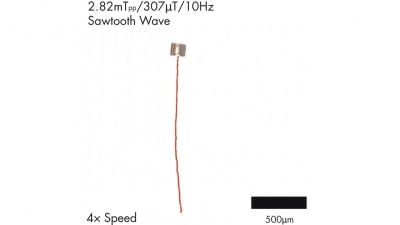
Georgia Tech researchers have shown that robots about the size of a particle of dust are capable of precise bidirectional control. By harnessing the power of a magnetic field generated by a...
Briefs: Internet of Things
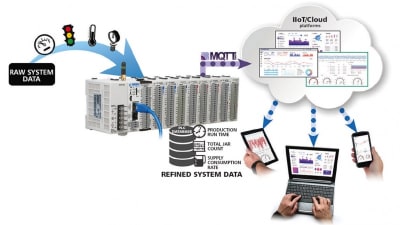
For many types of machinery and test equipment, there is a great need to perform basic automatic control functions, or even just sensor monitoring. Developing hardwired automation is...
Briefs: Robotics, Automation & Control
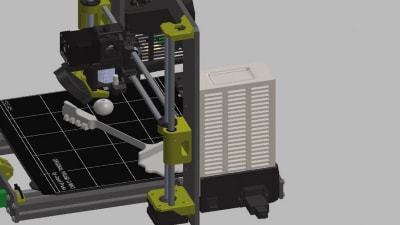
The automation of additive manufacturing (AM) is limited and usually still requires human labor workflows, including the fundamental step of removing the finished object from the printer...
Briefs: Robotics, Automation & Control
Researchers have developed a robot that uses radio waves, which can pass through walls, to sense occluded objects. The robot, called RF-Grasp, combines this powerful sensing with more traditional computer vision to...

Briefs: Robotics, Automation & Control
Robots are good at making identical repetitive movements such as a simple task on an assembly line. But they lack the ability to perceive objects as they move through an environment. A recent...

Briefs: Robotics, Automation & Control
A fish-inspired robot that can travel 26 meters through the air after takeoff could be used to collect water samples in hazardous and cluttered environments, such...
Briefs: Design
With a training technique commonly used to teach dogs to sit and stay, computer scientists showed a robot how to teach itself several new tricks including stacking blocks. With the method,...

Briefs: Manufacturing & Prototyping
Most conventional 3D printing processes rely on replicating a digital design model that is sliced into layers with the layers printed and assembled upward like a cake. A new method...

Briefs: Wearables
Elastic polymers, known as elastomers, can be stretched and released repeatedly and are used in applications such as gloves and heart valves, where they need to last a long time without tearing. But...

Briefs: Materials
A Penn State-led team of interdisciplinary researchers developed a polymer with robust piezoelectric effectiveness, resulting in 60 percent more efficient electricity...
Briefs: Manned Systems
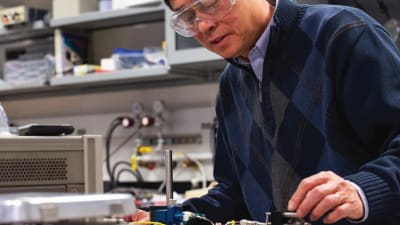
The highly customizable robotic arm can be twisted and turned in all directions.

Briefs: Sensors/Data Acquisition
These materials can detect when they are damaged, take the necessary steps to temporarily heal themselves, and then resume work.

Briefs: Robotics, Automation & Control
A carbon-based biosensor could drive new innovations in brain-controlled robotics.

Briefs: Materials
A new study challenges the conventional approach to designing soft robotics and metamaterials by utilizing the power of computer algorithms.

Briefs: Robotics, Automation & Control
By electrically stimulating nerves, this therapy can reduce epileptic seizures and soothe chronic pain without the use of conventional drugs like opioids.

Briefs: Motion Control
A haptic thumb-shaped sensor uses machine learning to accurately estimate where objects come into contact with the sensor and how large the applied forces are.

Briefs: Manufacturing & Prototyping
This testing method ensures that an exoskeleton and the person wearing it are moving smoothly and in harmony.

Briefs: Manufacturing & Prototyping
A software makes industrial robots nimbler and almost as sensitive as human hands.

Briefs: Motion Control
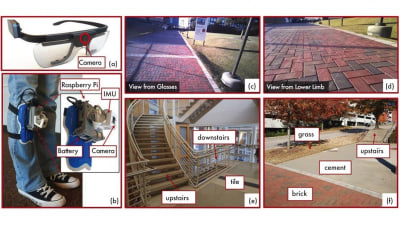
The software can be integrated with existing hardware to aid people using robotic prosthetics or exoskeletons.
Briefs: Motion Control
These “living machines” hold potential for applications from medical treatments to improving the environment.

Briefs: Robotics, Automation & Control
Synthesized micro-robots can convert their mechanical motion into a means of self-propulsion in water.

Briefs: Propulsion
A remotely controlled microswimmer could navigate the human body and aid in drug delivery.
Briefs: Motion Control
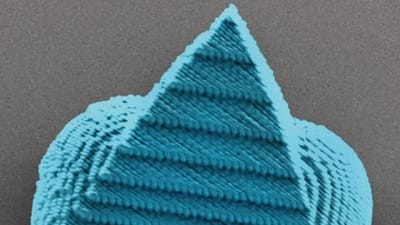
A new fabrication technique helps improve the performance of flying micro-robots.
Briefs: Manufacturing & Prototyping
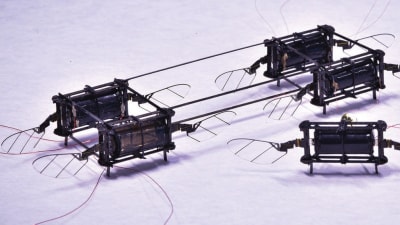
A new robot developed by Caltech researchers LEO carves out a new type of locomotion somewhere between walking and flying.

Briefs: Robotics, Automation & Control
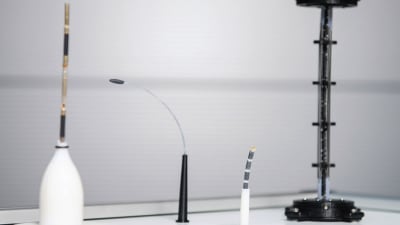
These shape memory robotic arms eliminate the need for joints, rigid skeletons, or framework.
Briefs: Robotics, Automation & Control
The robots move more quickly on solid surfaces or in the water than previous generations of soft robots.

Top Stories
 Blog: Lighting

A Stretchable OLED that Can Maintain Most of Its Luminescence
 Blog: Energy

Batteries that Can Withstand the Cold
 INSIDER: Energy

Advancing All-Solid-State Batteries
 Quiz: Energy

 Blog: Physical Sciences

 Blog: Materials

Webcasts
 Upcoming Webinars: Test & Measurement

From Spreadsheets to Insights: Fast Data Analysis Without Complex...
 Upcoming Webinars: Electronics & Computers

Cooling a New Generation of Aerospace and Defense Embedded...
 Upcoming Webinars: Test & Measurement

Beyond AI-Copy-Paste Engineering: Advanced AI-Integration Success...
 Upcoming Webinars: Automotive

Battery Abuse Testing: Pushing to Failure
 Upcoming Webinars: Internet of Things

A FREE Two-Day Event Dedicated to Connected Mobility
 Upcoming Webinars: Test & Measurement

Choosing the Right N-Port Strategy: Multiport VNAs vs. Switch...