-1
720
30
Briefs: Manned Systems
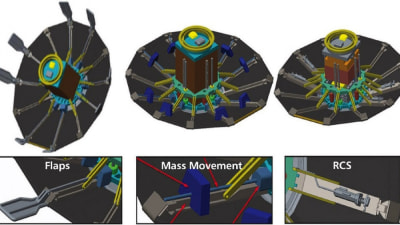
This novel flightpath control system exploits the dihedral effect to control the bank angle of the vehicle by modulating sideslip.
Briefs: Photonics/Optics
The technology has several applications including optical communications, remote sensing/LiDAR, and beam steering.

Briefs: Electronics & Computers
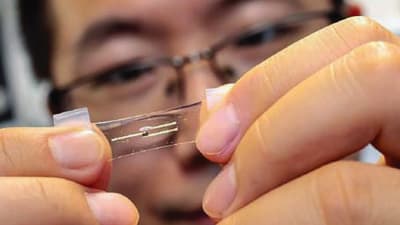
Flexible, wearable electronics could be used for precision medical sensors attached to the skin, designed to perform health monitoring and diagnosis.
Briefs: Sensors/Data Acquisition
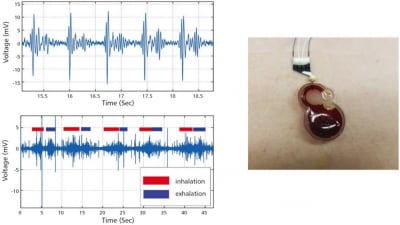
A highly sensitive wearable sensor for cardiorespiratory monitoring could potentially be worn continuously by cardiac patients or others who require constant monitoring.
Briefs: Electronics & Computers
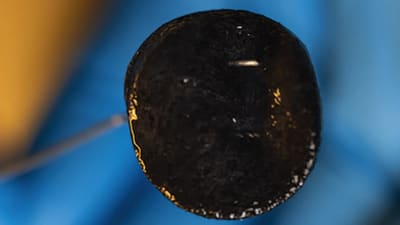
If a chemical spill in a river goes unnoticed for 20 minutes, it might be too late to remediate. Living bioelectronic sensors developed at Rice University can help.
Briefs: Defense
The system can indicate the time and location of an impact and the trajectory of that projectile using piezoelectric polymer film and sensors.

Briefs: Sensors/Data Acquisition
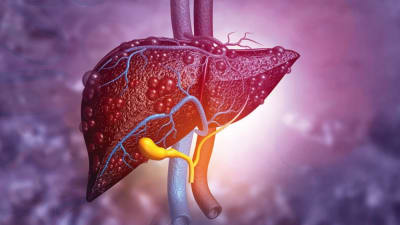
Diagnosing liver damage earlier could help to prevent liver failure in many patients.
Briefs: Wearables
The smart bandage can dispense antibiotic, monitor wound-healing biomarkers, and report important data directly to doctors.

Briefs: Data Acquisition
Traditional oxygen sensors have significant drawbacks and suffer from high power consumption.

Briefs: Design
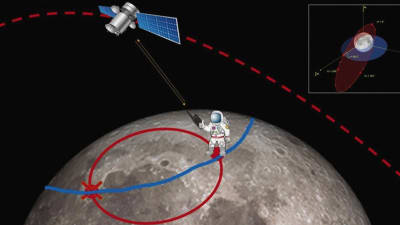
Scientists have developed a novel concept for a lunar navigation system based on the reverse-ephemeris technique.
Briefs: Sensors/Data Acquisition
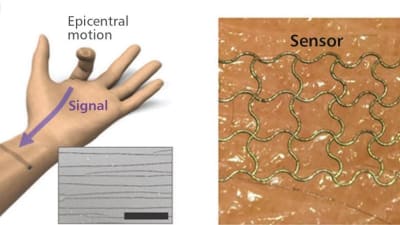
This system can track the motion of the entire body with a small sensory network.
Briefs: Motion Control
Accomplishing motion control with digitally commanded electric motors is a responsive, precise, and energy-efficient approach suitable for a wide range of applications.

Briefs: Materials
The thermoelectric textile produces a small amount of electricity when heated on one side.

Briefs: Wearables
Infused lenses create a safer way to see colors.

Briefs: Wearables
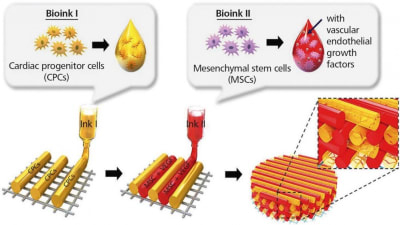
The system promotes myocardial regeneration after a cardiac event.
Briefs: Wearables
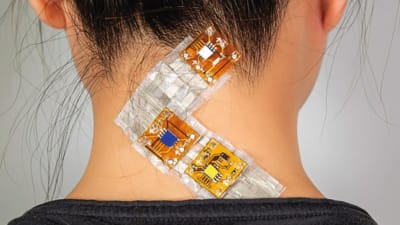
The next generation of wearable computing technology will be even closer to the wearer than a watch or glasses: It will be affixed to the skin.
Briefs: Robotics, Automation & Control
Research reveals that expertly timed lasers shined at an approaching LIDAR system can create a blind spot in front of the vehicle.

Briefs: Green Design & Manufacturing
To improve efficiency, it is necessary to characterize and reduce flow separation on curved surfaces.
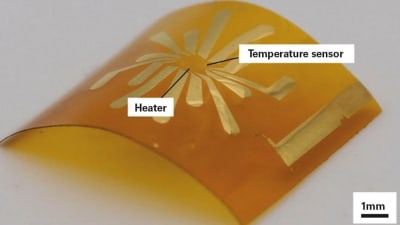
Briefs: Sensors/Data Acquisition
The work shows the real-world viability of their easy-to-use and inexpensive methods of testing.

Briefs: Aerospace
Inflatable and deployable beams and masts are often made of polymer composites and may be stored for one to two years in space before deployment.

Briefs: Materials
The discovery of a new category of shape-memory materials could open a new range of applications, especially for high-temperature settings.

Briefs: Test & Measurement
2D materials can be packed together more densely than conventional materials, so they could be used to make devices that run faster and perform better.
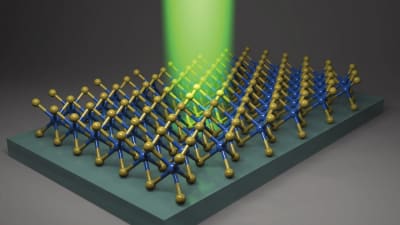
Briefs: Materials
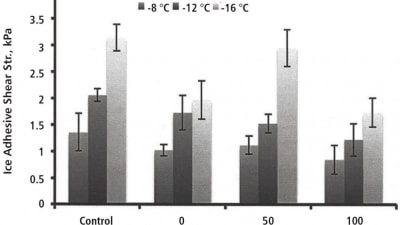
Researchers at NASA Langley are developing polymer coatings that reduce impact ice adhesion strength.
Briefs: Manufacturing & Prototyping
An MIT-developed heat treatment aims to transform the microscopic structure of 3D-printed metals, making the materials stronger and more resilient in extreme thermal environments.

Briefs: Design
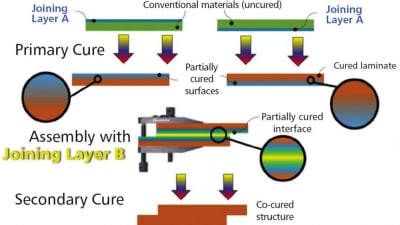
Industrial composite manufacturing is primarily accomplished through three methods: co-cure, co-bond, and secondary bond processes.
Briefs: Data Acquisition
Researchers have developed a method of imprinting a hidden magnetic tag, encoded with authentication information, within manufactured hardware during the part fabrication process.

Briefs: Manufacturing & Prototyping
Scientists have created the first completely digitally manufactured plasma sensors — also known as retarding potential analyzers (RPAs) — for orbiting spacecraft.

Briefs: Photonics/Optics
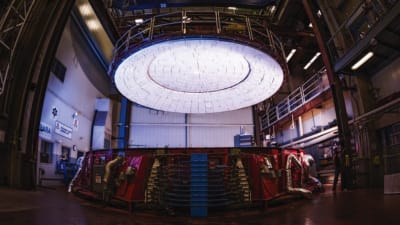
Nearly 20 tons of extremely pure borosilicate glass made by Ohara Corporation in Japan are becoming a honeycomb mirror measuring 27.6 feet across.
Briefs: Imaging
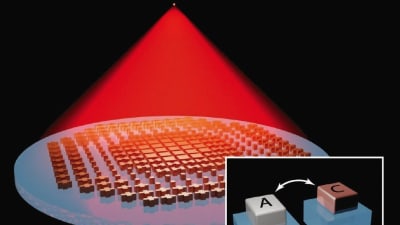
The design may enable miniature zoom lenses for drones, cellphones, or night-vision goggles.
Top Stories
 Blog: Design

A Stretchable OLED that Can Maintain Most of Its Luminescence
 INSIDER: Energy

Advancing All-Solid-State Batteries
 Blog: Power

My Opinion: We Need More Power Soon — Is Nuclear the Answer?
 Blog: Energy

Batteries that Can Withstand the Cold
 Quiz: Power

 Blog: Communications

Microscopic Swimming Machines that Can Sense, Respond to Surroundings
Webcasts
 On-Demand Webinars: Semiconductors & ICs

Advantages of Smart Power Distribution Unit Design for Automotive &...
 Upcoming Webinars: Transportation

Quiet, Please: NVH Improvement Opportunities in the Early Design...
 Upcoming Webinars: Sensors/Data Acquisition

From Spreadsheets to Insights: Fast Data Analysis Without Complex...
 Upcoming Webinars: Aerospace

Cooling a New Generation of Aerospace and Defense Embedded...
 Upcoming Webinars: Test & Measurement

Beyond AI-Copy-Paste Engineering: Advanced AI-Integration Success...
 Upcoming Webinars: Energy