Stay updated on the fast-changing advancements in robotics, automation, and control. Access the technical briefs and applications that are trending in AI, robotic operating systems, and machine learning.
See the future of aerospace and defense manufacturing in this compendium of articles from the editors of Tech Briefs and Aerospace & Defense Technology magazines.
The Create the Future Design Contest recognizes and rewards engineering innovations that promise a better tomorrow. In this special report, learn about the amazing winners chosen in 2025 from hundreds...
Relying solely on motor-based force/speed curves often leads to undersized actuators and costly system delays. This white paper explores the critical gap between...
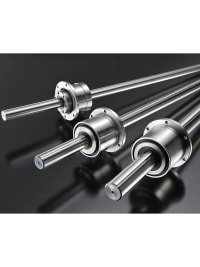
An essential question engineers ask before specifying a rotary ball spline is: Should the rotary spline nut be riding on angular contact ball bearings or crossed roller bearings?
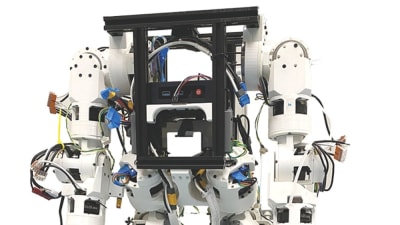
One of the 2026 CES Innovation Awards honorees in the robotics category is AEON — a humanoid robot developed to address labor shortages as industries adapt to ageing populations and shifting workforce demands.
See the products of tomorrow, including a new nanoscale optical device that works at room temperature to entangle the spin of photons (particles of light) and electrons to achieve quantum communication; a dust sensor for use in space environments; and more.
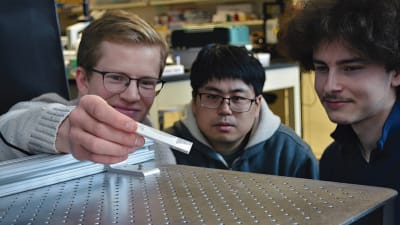
University of Minnesota Twin Cities researchers have discovered a new method to move objects using ultrasound waves, which opens the door for using contactless manipulation in industries in which devices wouldn’t need a built-in power source to move. Read on to learn more.
NASA has developed an innovative combination of a Magnetometer, low-powered ElectroMagnets, and Resonant Inductive Coupling (MEMRIC) to create and control relative positioning of nano satellites within a cluster. This is a game-changing approach to enable distributed nanosatellite (nanosat) clusters. Read on to learn more.
Researchers have created a light-powered soft robot that can carry loads through the air along established tracks, similar to cable cars or aerial trams. The soft robot operates autonomously, can climb slopes at angles of up to 80°, and can carry loads up to 12 times its weight. Read on to learn more.
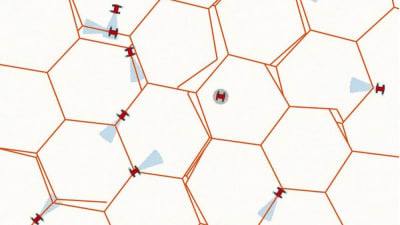
Bees, ants, and termites don’t need blueprints. They may have queens, but none of these species breed architects or construction managers. Each insect worker, or drone, simply responds to cues like warmth or the presence or absence of building material. Now, researchers at Penn Engineering have developed mathematical rules that allow virtual swarms of tiny robots to do the same. Read on to learn more.
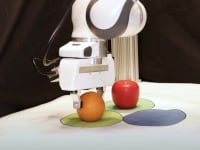
For a robot, the real world is a lot to take in. Making sense of every data point in a scene can take a huge amount of computational effort and time. Using that information to then decide how to best help a human is an even thornier exercise. Now, MIT roboticists have a way to cut through the data noise, to help robots focus on the features in a scene that are most relevant for assisting humans. Read on to learn more.
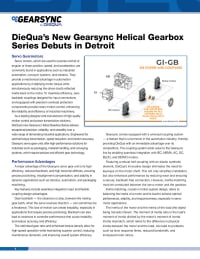
Achieving advanced, modern motion performance often feels like a battle against physics. Designers face tradeoffs among speed, precision, and cost, while...
From packaging to life science applications to office equipment to factory automation, smooth motion, fast accelerating and highly accurate are hallmarks of high quality linear movement actuators. Together with...
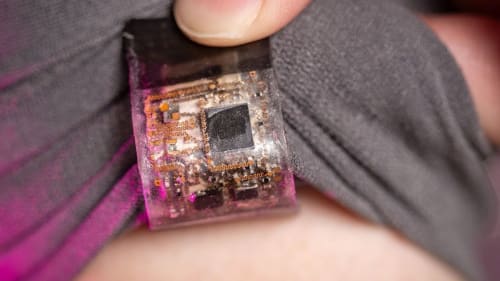
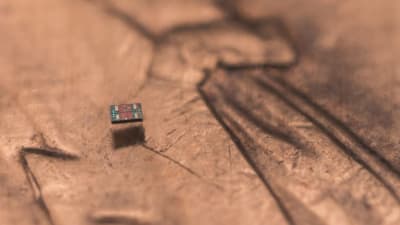
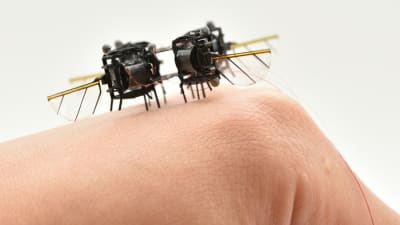
Researchers have created the world’s smallest programmable, autonomous robots: microscopic swimming machines that can independently sense and respond to their surroundings, operate for months, and cost just a penny each.
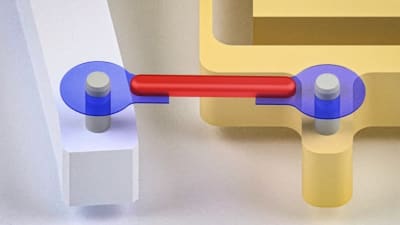
Our muscles are nature’s actuators. The sinewy tissue is what generates the forces that make our bodies move. In recent years, engineers have used real muscle tissue to actuate...
Researchers at the University of Pennsylvania and University of Michigan have created the world’s smallest fully programmable, autonomous robots: microscopic swimming machines that can...
Although many roboticists today turn to nature to inspire their designs, even bioinspired robots are usually fabricated from non-biological materials like metal, plastic, and...
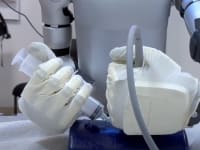
Ph.D. student in the Department of Electrical Engineering and Computer Sciences, Yufeng Chi is part of a team of Berkeley engineers that has developed Berkeley Humanoid Lite, a low-cost, open-source robot made of...
Leila Bridgeman and her team at Duke University Pratt School of Engineering are developing software that will improve upon existing techniques to ensure robust and safety-assured control for complex autonomous systems such as drones and medical robotics.
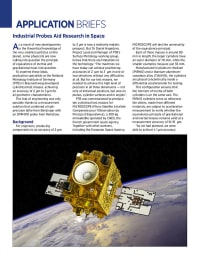
Renishaw’s advanced probing technology played a crucial role in supporting major space agency’s cutting‑edge particle physics research. Recent breakthroughs in particle...
This white paper describes new technology that enable engineers to easily program key functions into a linear position sensor and the inductive sensing technology that makes it...
Founded by MIT alumni, the Pickle Robot Company has built machines that can autonomously load and unload trucks inside warehouses and logistic centers.
As engineering continues to shape society and drive innovation, here are the year’s top 10 engineering stories that resonated most with Tech Briefs' audience.
As robotics evolve from tools to trusted partners, their impact across industries—from manufacturing and healthcare to education and home automation—is accelerating. This white...
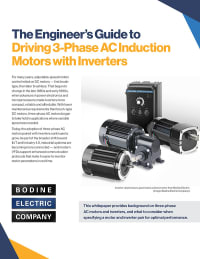
This whitepaper explores how to choose gearmotors for dirty and wet environments. Subject matter experts at Bodine Electric Company explain the standardized Ingress...
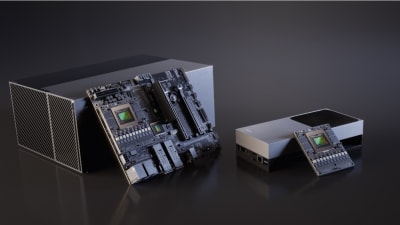
See the new products, including NVIDIA's IGX Thor, an industrial-grade platform built to bring real-time physical AI directly to the edge; Teknic's precision planetary gearboxes; PI's L-220 series linear actuators; Compact Click dev tool from MIKROE; and more.