Access your resource for innovative automation technologies and applications. Find technical briefs and applications that play an essential role in today's age of automation in industrial manufacturing and medical industries.
Electric vehicles are driving the need for a scalable, future‑ready charging infrastructure. This white paper explores the evolution of high‑power charging, comparing AC and...
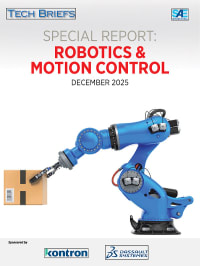
Engineering the next generation of surgical robots...conductive skin gives robots the human touch...how vision integration is transforming collaborative robotics. Read about these innovations and more...
See the future of aerospace and defense manufacturing in this compendium of articles from the editors of Tech Briefs and Aerospace & Defense Technology magazines.
The Create the Future Design Contest recognizes and rewards engineering innovations that promise a better tomorrow. In this special report, learn about the amazing winners chosen in 2025 from hundreds...
Relying solely on motor-based force/speed curves often leads to undersized actuators and costly system delays. This white paper explores the critical gap between...
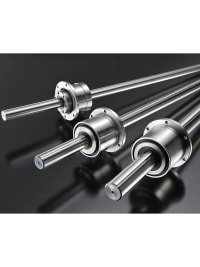
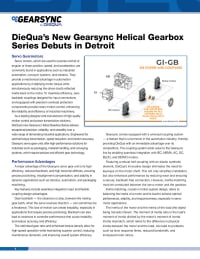
An essential question engineers ask before specifying a rotary ball spline is: Should the rotary spline nut be riding on angular contact ball bearings or crossed roller bearings?
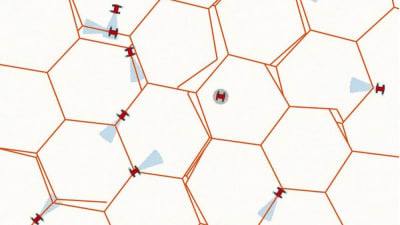
Bees, ants, and termites don’t need blueprints. They may have queens, but none of these species breed architects or construction managers. Each insect worker, or drone, simply responds to cues like warmth or the presence or absence of building material. Now, researchers at Penn Engineering have developed mathematical rules that allow virtual swarms of tiny robots to do the same. Read on to learn more.
For a robot, the real world is a lot to take in. Making sense of every data point in a scene can take a huge amount of computational effort and time. Using that information to then decide how to best help a human is an even thornier exercise. Now, MIT roboticists have a way to cut through the data noise, to help robots focus on the features in a scene that are most relevant for assisting humans. Read on to learn more.
Achieving advanced, modern motion performance often feels like a battle against physics. Designers face tradeoffs among speed, precision, and cost, while...
From packaging to life science applications to office equipment to factory automation, smooth motion, fast accelerating and highly accurate are hallmarks of high quality linear movement actuators. Together with...
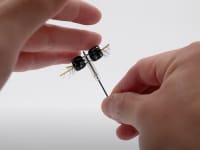
Researchers have created the world’s smallest programmable, autonomous robots: microscopic swimming machines that can independently sense and respond to their surroundings, operate for months, and cost just a penny each.
Our muscles are nature’s actuators. The sinewy tissue is what generates the forces that make our bodies move. In recent years, engineers have used real muscle tissue to actuate...
Researchers at the University of Pennsylvania and University of Michigan have created the world’s smallest fully programmable, autonomous robots: microscopic swimming machines that can...
Although many roboticists today turn to nature to inspire their designs, even bioinspired robots are usually fabricated from non-biological materials like metal, plastic, and...
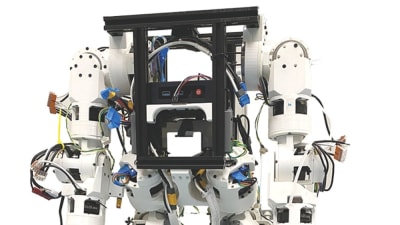
Ph.D. student in the Department of Electrical Engineering and Computer Sciences, Yufeng Chi is part of a team of Berkeley engineers that has developed Berkeley Humanoid Lite, a low-cost, open-source robot made of...
Leila Bridgeman and her team at Duke University Pratt School of Engineering are developing software that will improve upon existing techniques to ensure robust and safety-assured control for complex autonomous systems such as drones and medical robotics.
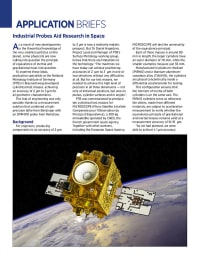
Renishaw’s advanced probing technology played a crucial role in supporting major space agency’s cutting‑edge particle physics research. Recent breakthroughs in particle...
This white paper describes new technology that enable engineers to easily program key functions into a linear position sensor and the inductive sensing technology that makes it...
Founded by MIT alumni, the Pickle Robot Company has built machines that can autonomously load and unload trucks inside warehouses and logistic centers.
As engineering continues to shape society and drive innovation, here are the year’s top 10 engineering stories that resonated most with Tech Briefs' audience.
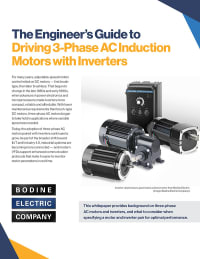
This whitepaper explores how to choose gearmotors for dirty and wet environments. Subject matter experts at Bodine Electric Company explain the standardized Ingress...
New technology for autonomous building on the moon and Mars…conductive skin gives robots a human touch…soft robots carry loads through the air, climb steep slopes. Read about these innovations and...
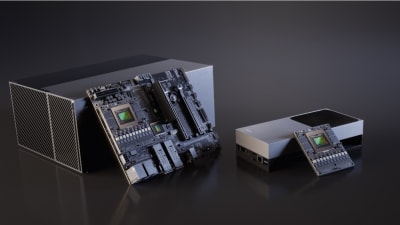
See the new products, including NVIDIA's IGX Thor, an industrial-grade platform built to bring real-time physical AI directly to the edge; Teknic's precision planetary gearboxes; PI's L-220 series linear actuators; Compact Click dev tool from MIKROE; and more.
Mechanical engineering researchers in the Harvard John A. Paulson School of Engineering and Applied Sciences think there’s another way to design robots: Programming intended functions directly into a robot’s physical structure, allowing the robot to react to its surroundings without the need for extensive on-board electronics. Read on to learn more.
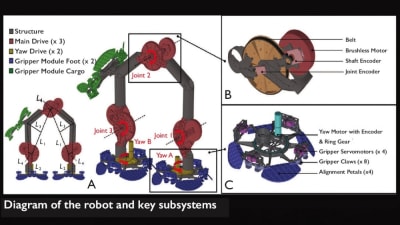
Missions to the moon and other planets will require large-scale infrastructure that would benefit from autonomous assembly by robots without on-site human intervention. NASA Ames Research Center has developed a novel and efficient mobile bipedal robot system to construct low-mass, high precision, and largescale infrastructure. Read on to learn more.
Finland-based Metos Oy, a manufacturer of professional stainless steel kitchen equipment, needed a welding solution that could deliver flawless, pressure-rated welds for small batches of high-spec products, which feature tubular structures and circular shafts that required continuous, precision welding. Read on to find out what they did.
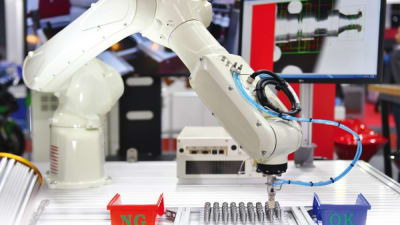
Without integrated vision, robots can only perform tasks in precisely the same way every time. If a part is even slightly out of position or rotated differently, the robot may fail to complete its task, or worse, cause an error in the process. Read on to learn more.
Battery packs are becoming larger and heavier, particularly in applications such as electric trucks, aviation and renewable energy storage. As payload requirements increase, manufacturers are turning to advanced automation and material handling systems to keep pace. Read on to learn what this means.