Materials & Manufacturing

Browse innovative developments in materials and manufacturing that significantly impact military, medical devices, automotive, and industrial manufacturing. Advances in plastics, metals, and composites are transforming 3D printing and rapid prototyping.

Articles: Sensors/Data Acquisition
Products of Tomorrow

subscribe to magazine
Get the latest breakthroughs from NASA & other technology sources.

Latest Briefs & News

Products: Manufacturing & Prototyping

New on the Market

Briefs: Manufacturing & Prototyping

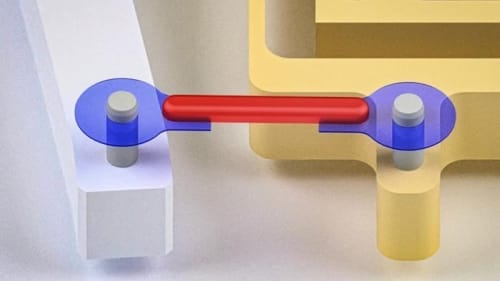
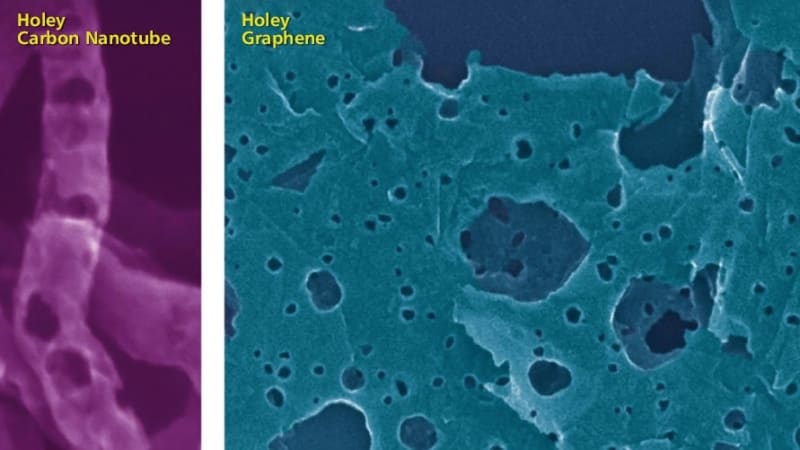
Holey Carbon Allotropes

36,38
0
0
30
White Papers: Aerospace
Document cover
Case Study: EP40 Used for Steel Bonding in Marine Applications
Researchers at CITENI and CITIC developed a novel method to evaluate adhesive aging on naval steel substrates under maritime conditions. Using Master Bond EP40, a high performance...

White Papers: Materials
Document cover
Your Guide to Sourcing Precision Metals for Bellows Manufacturing
From medical devices to automotive, aerospace, and cryogenic systems, bellows demand material that performs under pressure. Ulbrich supplies precision rolled strip and foil...

White Papers: Automotive
Document cover
Henkel’s Next Generation Gap Filler Case Study
Discover how Henkel’s next-generation gap fillers helped a leading Tier 1 automotive supplier solve complex heat management challenges while improving performance, accelerating production, and...

Briefs: Research Lab
Researchers in Korea have successfully developed a new material that significantly enhances the efficiency of green hydrogen production while reducing costs. Read on to learn more about it.
Feature Image
Briefs: Wearables
MIT researchers have developed an autonomous programmable computer in the form of an elastic fiber, which could monitor health conditions and physical activity, alerting the wearer to potential health risks in real-time. Read on to learn more.
Feature Image
Briefs: Semiconductors & ICs
In two papers, one released in Nature Materials and a second in ACS Nano, researchers describe a new methodology for fabricating targeted 3D nanoscale structures via self-assembly that can find use in a variety of applications, and they provide a design algorithm for others to follow suit. And it’s all based on the most basic biomolecular building blocks: DNA. Read on to learn more.
Feature Image
Briefs: Physical Sciences
Using mechanisms inspired by nature to create new technological innovations is a signature of one Virginia Tech research team. The group led by Associate Professor Michael Bartlett has created an octopus-inspired adhesive, inspired by the shape of octopus suckers, that can quickly grab and controllably release challenging underwater objects. Read on to learn more about it.
Feature Image
Briefs: Design
Dr. Mustafa Akbulut, Professor of Chemical engineering, has teamed up with Horticultural Science Professor Luis Cisneros-Zevallos to engineer longer-lasting, bacteria-free produce. Read on to learn more about it.
Feature Image
Briefs: Materials
To help meet surging demand and possible supply chain problems, scientists at the U.S. Department of Energy’s Argonne National Laboratory have developed an innovative membrane technology that efficiently extracts lithium from water. Read on to learn more.
Feature Image
Briefs: Materials
Researchers have developed five new ways to securely connect large concrete pieces. These connection methods are intended for a type of material called “precast concrete,” in which parts such as beams and columns are made in a factory and assembled later at a construction site. Read on to learn more.
Feature Image
Briefs: Sensors/Data Acquisition
Clean, safe water is vital for human health and well-being. However, detecting contamination quickly and accurately remains a major challenge in many parts of the world. A groundbreaking new device developed by researchers at the National University of Singapore has the potential to significantly advance water quality monitoring and management. Read on to learn more.
Feature Image
Briefs: Semiconductors & ICs
A new study from NC State University combines three-dimensional embroidery techniques with machine learning to create a fabric-based sensor that can control electronic devices through touch. Read on to learn more.
Feature Image
Briefs: Lighting Technology
University of Minnesota Twin Cities researchers have discovered a new method to move objects using ultrasound waves, which opens the door for using contactless manipulation in industries in which devices wouldn’t need a built-in power source to move. Read on to learn more.
Feature Image
Briefs: Manufacturing & Prototyping
Bees, ants, and termites don’t need blueprints. They may have queens, but none of these species breed architects or construction managers. Each insect worker, or drone, simply responds to cues like warmth or the presence or absence of building material. Now, researchers at Penn Engineering have developed mathematical rules that allow virtual swarms of tiny robots to do the same. Read on to learn more.
Feature Image
Special Reports: Test & Measurement
Document cover
Electric & Hybrid Vehicles - January 2026
Engineering safer, more secure EV chargers…the future of radial flux motors for mobility platforms...why the EV market will overcome tax credit losses. Read about these and other developments in this...

Special Reports: Sensors/Data Acquisition
Document cover
Photonics, Optics & Imaging - January 2026
Harvard research breakthrough could speed development of room‐temperature quantum computers…New generation of ultra‐lightweight, high‐res space cameras takes flight…NASA LiDAR advance gives...

Blog: Energy
Researchers detail how an existing sodium-based material, sodium vanadium oxide, can perform significantly better when the water it naturally contains is not removed.
Feature Image
INSIDER: Materials
Our muscles are nature’s actuators. The sinewy tissue is what generates the forces that make our bodies move. In recent years, engineers have used real muscle tissue to actuate...
Feature Image
White Papers: Power
Document cover
Case Study Supreme 10HT
Because of its outstanding strength and other physical properties, Master Bond Supreme 10HT has been selected for use in several published research studies. Following are summaries of how Supreme 10HT performed in...

INSIDER: Design
Although many roboticists today turn to nature to inspire their designs, even bioinspired robots are usually fabricated from non-biological materials like metal, plastic, and...
Feature Image
INSIDER: Design
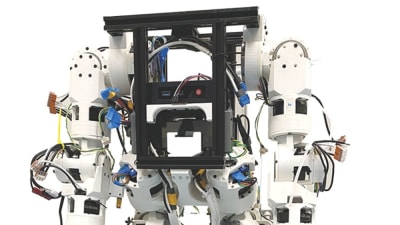
Ph.D. student in the Department of Electrical Engineering and Computer Sciences, Yufeng Chi is part of a team of Berkeley engineers that has developed Berkeley Humanoid Lite, a low-cost, open-source robot made of...
Feature Image
White Papers: Aerospace
Document cover
High Temperature Resistant Adhesives Beat the Heat
Selecting the right adhesive product for extreme temperature applications may seem as straightforward as reading temperature resistance values on data sheets. Some engineers will sometimes...

White Papers: Materials
Document cover
Potting and Encapsulation for Sensors
The range of performance and processing requirements facing sensor designers and manufacturers is vast. Suitable adhesive systems are readily available to meet those demands. Using different fillers,...

On-Demand Webinars: AR/AI
Feature Image
In today’s fast-evolving manufacturing landscape, augmented reality (AR) and artificial intelligence (AI) often are touted as game changers. But what’s the real-world value...
Blog: Materials
Researchers from The Ohio State University recently discovered that common edible fungi, such as shiitake mushrooms, can be grown and trained to act as organic memristors, a type of data processor that can remember past electrical states.
Feature Image
White Papers: Motion Control
Document cover
The Role of Linear Actuators in the Miniaturization of Medical Equipment
The medical industry is constantly growing, which has led to stricter requirements for medical equipment. Installation space is one particular area where designers and...

Blog: Design
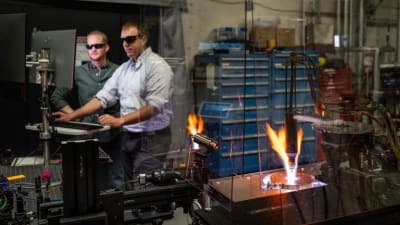
A team of engineers at Sandia National Laboratories has developed ways to rapidly evaluate new thermal protection (heat shield) materials for hypersonic vehicles.
Feature Image
INSIDER: Photonics/Optics
Stanford researchers have developed a flexible material that can quickly change its surface texture and colors, offering potential applications in camouflage, art, robotics, and...
Feature Image

Videos