Stories
41
0
90
30
On-Demand Webinars: Sensors/Data Acquisition

3D scanning using LiDAR technology is popular due to its fast data acquisition and the far ranges it can scan, which allow companies to create accurate and detailed 3D models of a space....
White Papers: Software

Engineering Quality from the Source – Developer-Driven Testing in Automotive
The introduction of the first modern vehicles in the late 19th Century kickstarted the automotive industry. Since then, we have swiftly moved through the mechanical...INSIDER: Electronics & Computers
The driverless robotaxis chauffeuring around San Francisco, and the advanced driver assistance features on more than half of new vehicles sold this year show just...
INSIDER: Semiconductors & ICs
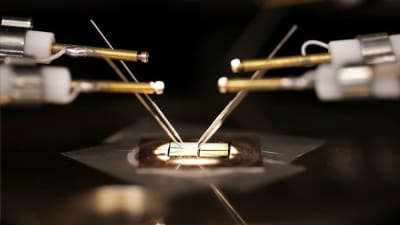
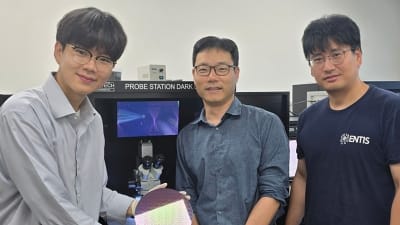
As electronics become smaller, it is becoming increasingly difficult to continue scaling down silicon-based transistors. Now, a research team led by the Institute of Industrial...

INSIDER: Green Design & Manufacturing
Between upgrades and breakdowns to cellphones, tablets, laptops, and appliances, so many electronic devices are getting tossed in the trash that they've taken on a name of their own:...

INSIDER: Electronics & Computers
A new class of synthetic materials could herald the next revolution of wireless technologies, enabling devices to be smaller, require less signal strength and use less power.
Products: Electronics & Computers
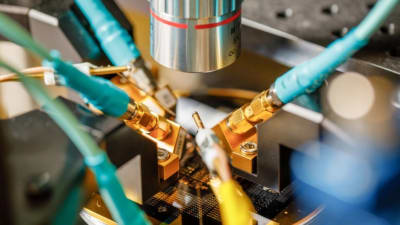
See the new products, including Bosch Rexroth’s space-optimized SMS screw-driven small modules; the updated capabilities of PI's PICMA® piezo stack actuator series via the introduction of the new PICMA® Plus actuators; Beckhoff's expanded MX-System control cabinet-free automation platform; and more.

Briefs: Robotics, Automation & Control
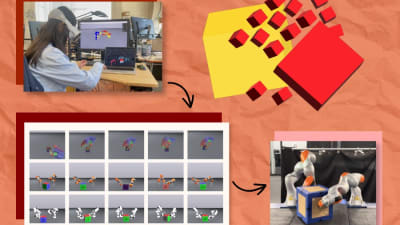
A human clearing junk out of an attic can often guess the contents of a box simply by picking it up and giving it a shake, without the need to see what’s inside. Researchers from MIT, Amazon Robotics, and the University of British Columbia have taught robots to do something similar. Read on to learn more.

Briefs: AR/AI
Researchers from Duke University have developed a novel framework named WildFusion that fuses vision, vibration, and touch to enable robots to “sense” complex outdoor environments much like humans do. Read on to learn more.

White Papers: Robotics, Automation & Control

6 Reasons You Should & 2 Reasons You Shouldn't Use a FLUX Inductive Rotary Encoder
Motion control systems operate in the real world, not in ideal lab conditions. FLUX Inductive Encoders deliver reliable, high-resolution position sensing even in...Special Reports: Electronics & Computers

Test & Measurement - July 2025
How climate conditions impact EV charging times…a new way to measure superconductivity in “magic” materials…NASA devises a handheld space telescope. Read about these and other innovations in a new report...Blog: Medical
Scientists have developed a low-cost, durable, highly-sensitive robotic ‘skin’ that can be added to robotic hands like a glove, enabling robots to detect information about their surroundings in a way that’s similar to humans.

Special Reports: Energy

Electric Vehicles - July 2025
In this collection of articles from the editors of Automotive Engineering and Battery & Electrification Technology, learn about the future of 48V systems in commercial vehicles, challenges and opportunities for...INSIDER: Sensors/Data Acquisition
In the midst of the co-development of artificial intelligence and robotic advancements, developing technologies that enable robots to efficiently perceive and respond to their surroundings like humans has...
INSIDER: Robotics, Automation & Control
When ChatGPT or Gemini give what seems to be an expert response to your burning questions, you may not realize how much information it relies on to give that reply. Like...
White Papers: Sensors/Data Acquisition

Why Resolvers Excel in EMI-Intensive Edrive Systems
Gain practical engineering insights and design strategies to enhance resolver integration, durability, and performance in modern electric drivetrains with our detailed white paper. Inside,...Blog: Design
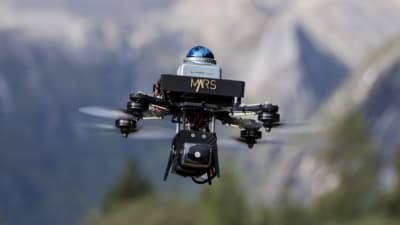
The team has developed the Safety-Assured High-Speed Aerial Robot (SUPER), capable of flying at speeds exceeding 20 meters per second [about 45 miles per hour] and avoiding obstacles as thin as 2.5 millimeters [about 0.1 inch] — such as power lines or twigs — using solely onboard sensors and computing power.
Quiz: Energy
How much do you know about transducers? Find out with this quiz.
Special Reports: Robotics, Automation & Control

Robotics & Motion Control - June 2025
Once a staple of science fiction, humanoid robots are rapidly becoming a reality. Our executive panel weighs in. Get their insights in this compendium of articles from the editors of Tech Briefs and...Special Reports: Aerospace

Rugged/Hi‐Rel Electronics - June 2025
How advanced packaging is transforming mission‐critical electronics…a new era of high‐speed data transmission in defense…fully rugged PCs provide a decisive edge on the battlefield. Read about...Blog: Sensors/Data Acquisition
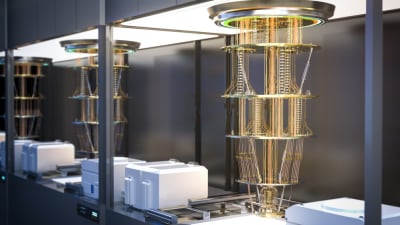
My Opinion: Quantum computing is coming but has this engineer puzzled. As we celebrate 2025, the International Year of Quantum Science and Technology, I find that thinking about these things from an engineer’s point of view is quite challenging.
INSIDER: Robotics, Automation & Control
Analog computing is making a comeback with hardware that processes and stores information in the same location, similar to biological...

On-Demand Webinars: Imaging

Advancements in silicon photonic and micro-optic technologies are driving the need to perform precision alignments down to sub-micrometer levels. As cutting-edge optical and...
INSIDER: Electronics & Computers
Stronger cell phone signals, more accurate sensors, and cleaner energy may be achieved by adding a simple step to the industrial fabrication process of...
INSIDER: Sensors/Data Acquisition
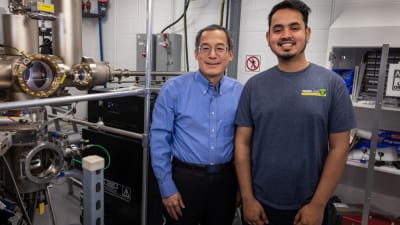
Northwestern University researchers have developed the first wearable device for measuring gases emitted from and absorbed by the skin. By analyzing these gases, the device...

INSIDER: Sensors/Data Acquisition
What if ultrafast pulses of light could operate computers at speeds a million times faster than today's best processors? A team of scientists, including researchers from...
Briefs: Sensors/Data Acquisition
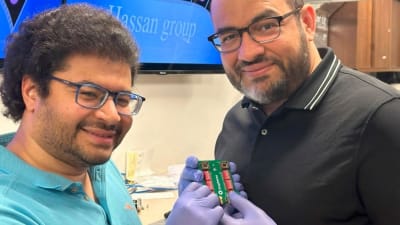
These materials can detect when they are damaged, take the necessary steps to temporarily heal themselves, and then resume work.

Briefs: Power
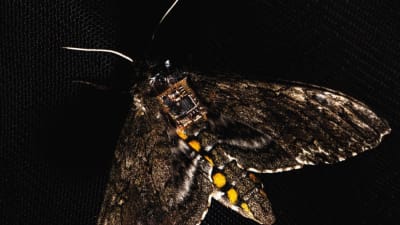
Researchers have created a 98-milligram sensor system — about one tenth the weight of a jellybean or less than one-hundredth of an ounce — that can ride aboard a small drone or an insect, such as a moth, until it gets to its destination. Then, when a researcher sends a Bluetooth command, the sensor is released from its perch and can fall up to 72 feet — from about the sixth floor of a building — and land without breaking. Once on the ground, the sensor can collect data, such as temperature or humidity, for almost three years.
Briefs: Nanotechnology
Researchers have developed a new type of sensor platform using a gold nanoparticle array. The sensor is made up of a series of gold disk-shaped nanoparticles on a glass slide. When an infrared laser is pointed at a precise arrangement of the particles, they start to emit unusual amounts of ultraviolet light. Read on to learn more.
Top Stories
 Blog: Lighting

A Stretchable OLED that Can Maintain Most of Its Luminescence
 INSIDER: Energy

Advancing All-Solid-State Batteries
 Blog: Power

My Opinion: We Need More Power Soon — Is Nuclear the Answer?
 Quiz: Energy

 Blog: Lighting Technology

Microscopic Swimming Machines that Can Sense, Respond to Surroundings
 Blog: Data Acquisition

Webcasts
 On-Demand Webinars: Electronics & Computers

Advantages of Smart Power Distribution Unit Design for Automotive &...
 Upcoming Webinars: Automotive

Quiet, Please: NVH Improvement Opportunities in the Early Design...
 Upcoming Webinars: Test & Measurement

From Spreadsheets to Insights: Fast Data Analysis Without Complex...
 Upcoming Webinars: Defense

Cooling a New Generation of Aerospace and Defense Embedded...
 Upcoming Webinars: Sensors/Data Acquisition

Beyond AI-Copy-Paste Engineering: Advanced AI-Integration Success...
 Upcoming Webinars: Power